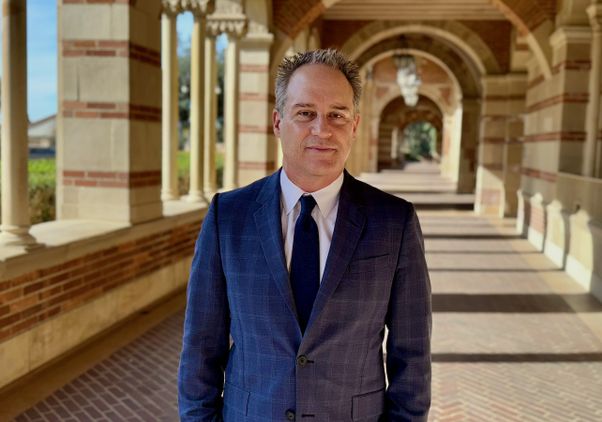
William Marotti, an associate professor of history and a scholar with the UCLA Terasaki Center for Japanese Studies, recently published a book, "Money, Trains, and Guillotines: Art and Revolution in 1960s Japan," that has garnered attention from magazines and journals in the fields of art and Asian studies.
In the book, Marotti focused on the reaction of avant-garde art movements to the sterilization of culture in Japan during the 1950s and ’60s. The book highlights such protest projects as Akasegawa Genpei's 1,000-yen prints, a group performance on the busy Yamanote train line and a plan for a giant guillotine in the Imperial Plaza. "Money, Trains and Guillotines" was reviewed recently by Art in America magazine and by Leonardo online journal. This indepth analysis by Marotti is the product of 20 years of work and research.
He is a contributor to the forthcoming volume on experimental global music, "Tomorrow is the Question: New Directions in Experimental Music Styles."