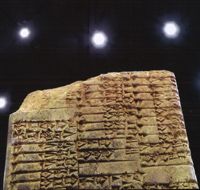
The Andrew W. Mellon Foundation has awarded UCLA $450,000 for the third phase of an international project aimed at digitizing many of the world’s oldest surviving texts. Under the direction of the UCLA Cuneiform Digital Library Initiative (CDLI), Creating a Sustainable Cuneiform Digital Library is building a permanent digital repository of cuneiform texts dating from the 4th millennium B.C. to the time of Christ. By making the content of these ancient texts available online, the project is unharnessing the history told by some of the earliest witnesses to our shared world heritage, for the benefit of scholars and informal learners worldwide.
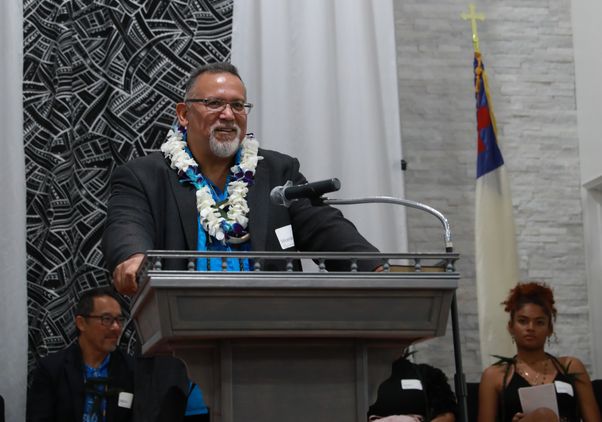
"Thanks to Mellon’s ongoing support, we are providing free access to some of humanity’s earliest writings," said Robert K. Englund, professor of Assyriology in the UCLA College of Letters and Science’s Department of Near Eastern Languages and Cultures and director of CDLI. "Historically significant artifacts thus move from storage facilities and exhibit halls in Chicago and Paris into the libraries and living rooms of an interested public in Beijing, New York, Baghdad and Cairo."
Mellon has been a key funder of the international effort to create a cuneiform digital library. With this latest grant, Mellon has invested more than $2.3 million in the CDLI project since it began in 2008. UCLA’s Humanities Division is contributing $92,000 to this phase of the project, which is expected to run through 2015. The third phase will continue this work in close partnership with the University of Oxford, and it marks the start of a formal collaboration with the Musée du Louvre in Paris to digitize its important cuneiform collection, which includes artifacts from the French excavations of Iranian Susa (center of ancient Elam and repository of plunder from Elamite raids into Babylonia) and the statues and archives of Telloh, ancient Girsu, in the Sumerian heartland.
Academic researchers and curators at institutions in the United States, Canada, Europe and the Middle East have collaborated at an unprecedented level on what seems a mammoth task. Roughly a half-million cuneiform tablets have been excavated, left behind by ancient peoples from approximately 3350 B.C. through the end of the pre-Christian era.
The first two phases of the Mellon-funded project resulted in new methods of electronic capture and permanent data archiving of often-decaying cuneiform collections in many public and private institutions. Alongside these efforts, information technology specialists have worked to ensure that the search capability of the digital library is fast, simple and intuitive, and that user interfaces keep pace with evolving technology.