More than 10,000 adults offered their thoughts on health care reform, immigration, taxes, climate change, Black Lives Matter and other public policy issues.
UCLA’s Leah Boustan looks at how the influx of millions of black workers from the South reshaped labor markets and neighborhoods in the North and West.
The percentage of black students who attend completely or almost-completely non-white schools has declined since the 1990s but remains above 70 percent.
When protests erupted after President Trump signed his executive order on immigration last month, more than 200 UCLA School of Law students jumped into action.
Lynn Vavreck notes that in 2016 more people care about the party of their future in-law than cared in 1958, and there is more desire for same-party marriage than there was in the 1950s.
Law professor Aslı Bâli explains how a previous effort following 9/11 called National Security Entry-Exit Registration System failed to achieve its goals.
The program is designed to better prepare its graduates for their next career move, be it pursuing a Ph.D. or landing a job as a multifaceted researcher in the corporate or nonprofit world.
The pain of loneliness can cut deeper than a knife. But its implications go beyond inner turmoil and the corrosion of emotional health. It can contribute to a host of debilitating and sometimes lethal diseases.
Tyrone Howard's Black Male Institute at UCLA focuses on finding ways to propel black male youth to college and prepare them for success in academia and professional life.
Economist Lee Ohanian on how the president-elect’s plans to reduce globalization and immigration could undermine his promises of job growth and prosperity.
Thanks to a multimillion-dollar grant from the U.S. Department of Transportation, faculty, staff researchers, and students affiliated with the UCLA Luskin Institute of Transportation Studies will be part of a new regional transportation center.
The roots of America’s widespread opioid addiction are multifaceted and extend to the economy, bad medicine and corrupt pharmacists, said UCLA legal scholar and health policy expert Jill Horwitz.
The wave of protests that erupted after Donald J. Trump’s unexpected presidential victory was no surprise to Zachary Steinert-Threlkeld, an assistant professor in the UCLA Luskin School of Public Affairs Department of Public Policy.
In a national poll by UCLA and Prevention, 92 percent of respondents said they would keep their current health care plans unless premium prices increased significantly.
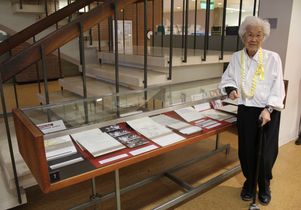
At the time of her three-year incarceration in internment camps, she didn't ask herself why this was happening. But in the ensuing years, she and her husband began a tireless quest for answers.
Misunderstanding voters’ feelings, the natural unreliability of polling and insufficient skepticism from journalists contributed to predictions showing Hillary Clinton would be president.