With an impressive string of cited amicus briefs and appellate litigation appearances, UCLA Law faculty members are making an impact on important issues.
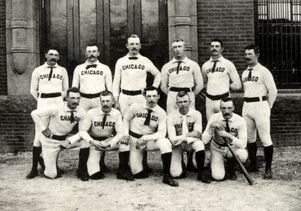
Waugh, an authority on American history and lifelong baseball fan, explains how baseball has (and hasn’t) changed, why it became the national pastime and how she teaches the sport’s history.
Law professor Kimberlé Crenshaw writes in the Washington Post about how intersectionality brings to light the invisibility of many constituents within groups that claim them as members, but often fail to represent them.
UCLA Anderson Forecast’s third quarterly report of 2015 predicts a strong outlook for the next two years, with a slim chance of a recession and a slight change for a surge in growth.
The much-debated nuclear agreement with Iran is now a fact and should be given a chance to work, a panel of experts from UCLA and the RAND Corporation said during a discussion that drew a packed crowd to a lecture hall in Bunche Hall recently.
The UCLA Asian American Studies Center has launched the Suyama Project to gather and make available online evidence of resistance among Japanese Americans forcibly removed from their homes during World War II.
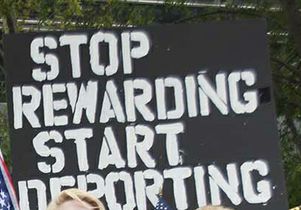
Professor Carola Suárez-Orozco and Dean Marcelo Suárez-Orozco write in an op-ed about how Donald Trump-style immigration rhetoric hurts immigrant children and the children of immigrants.
As part of the Hammer Museum’s Forum, Sen. Bob Graham, co-chair of the joint Congressional inquiry into the Sept. 11 terrorist attacks, will address part of the Sept. 11 report that remains classified.
Nearly 1 in 5 older adults in California live in an economic no-man’s land, unable to afford basic needs, according to a study by the UCLA Center of Health Policy Research.
Sociologist Edward T. Walker writes in the New York Times that rich corporations are leveraging social media to get customers and ordinary citizens to act as de facto lobbyists.
Political science professor Lynn Vavreck writes in the New York Times that endorsements for the 2016 GOP presidential nomination have been few so far because of a lack of a consensus pick among party elites.
History professor Brenda Stevenson writes that 150 years after emancipation in the United States, there are still 20 to 30 million people enslaved around the world.
Olivia Raynor, director of UCLA's Tarjan Center and a disability rights leader, talks about the significance of the Americans with Disabilities Act 25 years ago and the central role of the late Douglas Martin in implementing its rules and regulations on campus.
Dismissing unrest in America’s cities as aimless violence overlooks the roots of people’s anger, according to the panelists at a UCLA-Zócalo event examining the history of urban resistance.
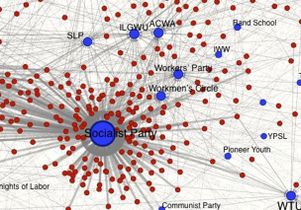
Tobias Higbie is a UCLA scholar of labor history who is using digitized historical records to gain new perspectives about labor and social movements of past eras.
Fernando Torres-Gil writes that Americans can learn a lot from how two of the country’s fastest growing populations are learning how to embrace change.
UCLA education professor Linda Sax undertook a study to better understand who women’s college students are today and to identify how they’ve changed over time.
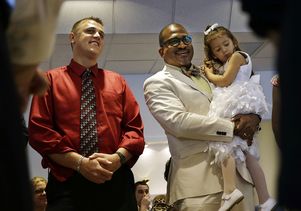
Law professor Douglas NeJaime writes in the Los Angeles Times that the struggle for full legal protections and equal rights has not ended for gay and lesbian families.
UCLA professor Michael Stoll chronicles shift from getting tough on crime with policies like mandatory minimum sentences to smarter approaches to crime and punishment.
Adam Winkler notes that the legal reasoning used by Chief Justice John Roberts in the decision that upheld the president’s signature health care law will preserve it against future challenges.
In its historic decision legalizing same-sex marriage nationwide, the U.S. Supreme Court today cited research by Gary Gates, the Blachford-Cooper Distinguished Scholar and Research Director at the Williams Institute at UCLA School of Law.