Scientists had assumed the core was rotating at about the same speed as the surface, but this surprising observation might reveal what the sun was like when it formed.
“The dream is to have an array of hundreds or thousands of qubits all working together to solve a difficult problem,” said graduate student Joshua Schoenfield. “This work is an important step toward realizing that dream.”
UCLA has been awarded a grant to help encourage participation and cultivate the talent of students in the natural sciences, especially underrepresented ethnic minorities, first-generation college students and working adults with families.
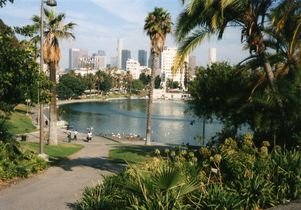
Study showed air, soil and water from city parks in Los Angeles, San Diego, Fresno and Bakersfield contained high quantities of the genes in bacteria cells.
The new technique for breaking carbon–hydrogen bonds and making carbon–carbon bonds uses catalysts made of silicon and boron, which are abundant and inexpensive.
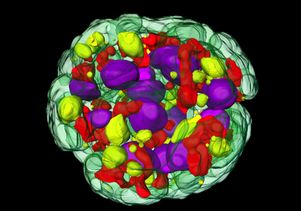
The finding represents one of the clearest examples to date of the phenomenon — stretches of DNA that exist for no reason other than promoting their own inheritance — at the molecular level.
A biologically friendly supercapacitor invented by UCLA and University of Connecticut researchers charges using electrolytes from biological fluids like blood serum and urine.
“Climate Lab” — a six-episode video series on climate change from Vox and the University of California — is already getting plenty of attention although it's just getting started.
The funds will support the researchers’ efforts to develop a process for capturing carbon dioxide and converting it into a material that can be used in building and construction.
Paradoxically, the strong relationship between stress level and the tendency to forget course material was most prevalent among students who are most confident in their own mathematical abilities.
UCLA research staff, investigators, university partners and study participants have a new tool called ResearchGo to guide them through the often confusing process of pursuing and maintaining research studies and clinical trials.
UCLA Ph.D. student Andy Tay writes about a crucial a challenge to long-distance space travel — overcoming the long-term effects of microgravity on our bodies.
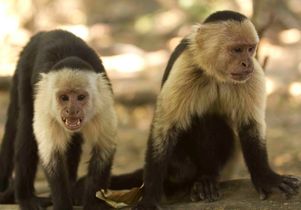
UCLA's Congo Basin Institute led a team of UCLA and Cameroonian students into a rain forest in central Africa to reopen a field station in a jungle with a thriving ecosystem with birds, elephants and monkeys.
An international team of astronomers has observed a striking spiral pattern in the gas surrounding a red giant star called LL Pegasi and its companion star 3,400 light-years from Earth.
A “baby” solar system 300 light-years away has given astrophysicists from UCLA and the Carnegie Institution for Science a rare peek at the formation of a planet.