The development of DZ-2384 by UCLA chemists led to an international research collaboration which found that the molecule appears to help fight several types of cancer.
The technique, called a "non-malleable commitment," is the electronic equivalent of a lockbox and requires only two rounds of one-way communication from the sender to the recipient.
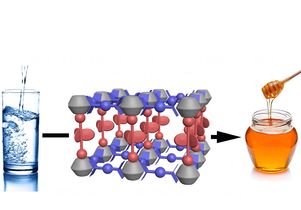
UCLA researchers note that the next decade shows great promise for things like improving food safety, fighting infections, storing energy and supplying clean energy.
A study by UCLA researchers found that a noninvasive method can help to determine whether an individual will enter remission after just one week of medical treatment.
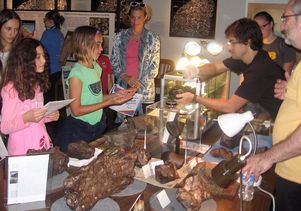
Touching a large meteorite, making your own cloud in a bottle and attending a planetarium show are just some of the activities visitors can look forward to at Exploring Your Universe.
UCLA scientists and colleagues identify the structure of a molecule that kills mosquitoes carrying malaria. The findings are a step toward genetically engineering a toxin that would be lethal to species that carry other diseases.
Multicolored laser light could be used to cool atoms of hydrogen or carbon to nearly absolute zero, allowing scientists to study chemical reactions at the quantum scale.
The UCLA professor emeritus, who directed the California NanoSystems Institute at UCLA, was honored with two others for designing and developing molecular machines.
Five excited UCLA freshmen recently met the cast, producers, writers and crew of “The Big Bang Theory,” the people who are helping to fund their scholarships.
New findings by a UCLA-led team of researchers answer a question about our space environment and will help scientists protect telecommunication and navigation satellites.
The laboratory-grown tissue can be used to study diseases including idiopathic pulmonary fibrosis, which has traditionally been difficult to study using conventional methods.
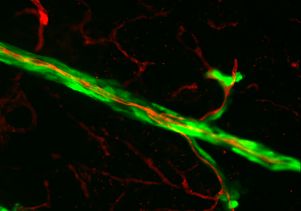
The findings are a major step toward confirming an unusual theory of how some cancer cells metastasize, and the study could lead to new strategies for keeping melanoma from spreading.