Protein-imaging method developed by new UCLA researcher overcomes challenges of current techniques, offering untold potential in the exploration of disease and treatment.
The scientists believe the technique, which focuses on cells’ mitochondria, could eventually lead to a way to delay the onset of Parkinson’s disease, Alzheimer’s disease and cancer.
"“Dementia is an isolating disease that can bring on loneliness and is often void of opportunities for social interactions,” says Dr. Zaldy Tan, UCLA gerontologist and director of TimeOut @ UCLA.
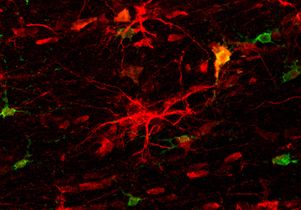
Neuroscientists at UCLA have developed a new technique for studying a particular type of cell in the brain known as an astrocyte that may play a role in diseases such as Lou Gehrig’s disease and Alzheimer's disease.
UCLA researchers note that the next decade shows great promise for things like improving food safety, fighting infections, storing energy and supplying clean energy.
Dr. Gary Small's advice for maintaining a healthy memory isn’t so different from what an internist might suggest to maintain a healthy body: Eat right, exercise and get enough sleep.
The research is the first to demonstrate how lifestyle factors directly influence abnormal proteins in people with subtle memory loss who have not yet been diagnosed with dementia.
UCLA researchers found that physical activity particularly affected the size of the hippocampus, which is the part of the brain controlling short-term memory.
Through a systematic review of Alzheimer’s studies, Ron Brookmeyer’s team at UCLA has found that the rate of being diagnosed with the disease doubles every five years in older populations.
One of the three variations appears to be fundamentally a different condition than the other two, said Dr. Dale Bredesen, a UCLA professor of neurology.
The money will fund a new collaboration among primary care clinics, community-based organizations and educational institutions throughout Riverside County.
The finding marks the final step in an international consortium’s successful effort to develop a unified and reliable approach to assessing signs of Alzheimer’s-related neurodegeneration through structural imaging tests.
Development of a blood test to diagnose the disease would have the advantage of being safe, affordable and easy to administer in large groups or in rural areas.
New UCLA brain research offers hope that lost memories can be restored. The study provides evidence that long-term memory is not stored at synapses, as previously thought.
UCLA researchers have discovered how naturally occurring vault nanoparticles form in cells, which could lead to understanding the root causes of Alzheimer’s, Parkinson’s and other diseases.
In a small-scale study, nine of 10 people with the disease displayed subjective or objective improvement in their memories beginning within three to six months.