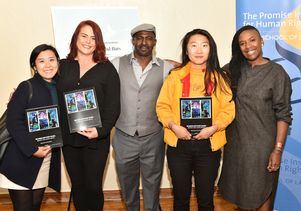
In its decade of work, the clinic has trained 400-plus volunteers and helped more than 2,800 people secure things like employment, housing, and education.
The report highlights needed improvement in housing policies and employment opportunities to ensure that incarcerated women and their families successfully adapt.
Data from 2014–17 shows that 25 percent of those arrested were elementary- or middle school-aged and there was a disparity in police interactions for black students.
Research by Joanna Schwartz played a key role in a decision rejecting the use of qualified immunity to defend police officers from a lawsuit that arose out of their official conduct.
The Prison Education Program helps incarcerated students change their lives through education, and informs UCLA students about how prisons affect communities.
Half of those admitted to juvenile justice facilities before their teenage years reported suicidal thoughts as adults, according to a new study by UCLA researchers.
UCLA history professor Kelly Lytle Hernández’s Million Dollar Hoods project that maps the costs of incarceration in Los Angeles is now housed at the center.
UCLA senior James Anderson spent three years behind bars, then co-founded a nonprofit that helps formerly incarcerated people, and now plans to dedicate himself to justice system reform.
What are the prospects for young men and women who grow up in and then age out of the juvenile justice system? Research and the media paint a bleak picture for those whose adolescent years have been intertwined with incarceration.
In this Q&A about her new book, UCLA history professor Kelly Lytle Hernández highlights how decades of discriminatory policies gave rise to this dubious distinction.
To commemorate the 25th anniversary of the L.A. riots, UCLA faculty, artists, authors and community leaders will reflect on this flash point and the aftermath in a series of talks and programs.
“The New Criminal Justice Thinking,” which UCLA’s Sharon Dolovich edited with professor Alexandra Natapoff of Loyola Law School, includes 14 essays by scholars, sociologists and criminologists who train their eyes on the system’s hidden corners.
Historian Kelly Lytle Hernandez corrects the revisionist history of Operation Wetback, which in fact eased immigration law enforcement in the U.S.-Mexico border region.
UCLA Luskin School of Public Affairs researchers have been selected to join the Research Network on Misdemeanor Justice, based at the John Jay College of Criminal Justice in New York, to study policing patterns related to misdemeanors in the city of Los Angeles.
Tyrone Howard's Black Male Institute at UCLA focuses on finding ways to propel black male youth to college and prepare them for success in academia and professional life.
The research found that although cases were handled swiftly, there were failings in protecting the rights of defendants, providing police oversight and investigating crimes.