Research brief: UCLA and UC Irvine researchers examined data on collisions, road hazards and weather from the California Highway Patrol and the popular traffic app.
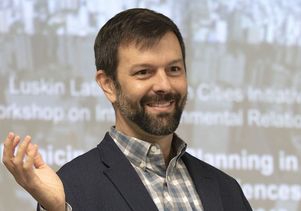
The UCLA Luskin School of Public Affairs’ Latin American Cities Initiative brings urban planning students, educators and practitioners into a multinational conversation.
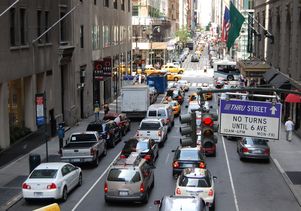
Donald Shoup: If New York City charged $5.50 a day in just half its available spaces, the total revenue would amount to $3 billion a year available for services.
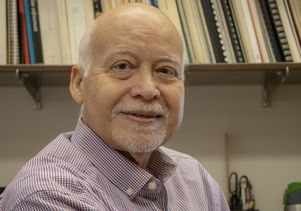
UCLA colleagues recall his 40 years as a researcher, teacher and mentor, which included serving on the Christopher Commission and advocacy for people of color.
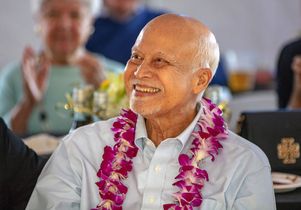
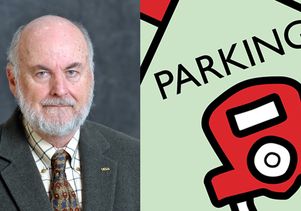
Shoup, the distinguished professor of urban planning and internationally renownded guru of parking, received Distinguished Educator Award from the Association of Collegiate Schools of Planning.
Economist Jerry Nickelsburg advocates long-term planning that accounts for transportation and housing policy, as well as for creating incentives for more mass transit use.
Three urban planning professors note that L.A. has more land, and land value, than development, so a small land tax could raise more money for affordable housing.
As these communities rapidly gentrify, spurred in part by extension of the region’s rail network, soaring rents are pushing out the newest generation of immigrants and threatening their businesses.
Minimum parking requirements — rules that are imposed on developers of apartment buildings, among other builders, to provide parking spaces for their tenants — are partly to blame for the crisis in affordable housing in cities like Los Angeles.
Herbie Huff notes that dynamic tolling, which varies toll prices to sync with demand, is a far cheaper option for easing congestion than adding lanes to freeways.
Architecture professor Thom Mayne says that adding density around Wilshire Boulevard could accommodate 1 million new people in Los Angeles while promoting sustainability.
New reports show how to add 1.5 million people to the county while preserving the vast majority of the area’s character and staying lower density than Manhattan.
UCLA urban planners create an interactive mapping tool to analyze whether developments near Los Angeles light-rail and subway projects displace people.
Two urban planners at UCLA have taken a close look at the effects of cultural revitalization on two adjoining, but vastly different areas in downtown Los Angeles.