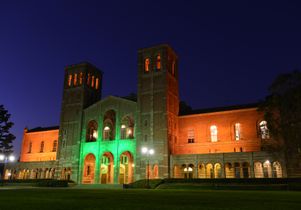
From Oct. 6 and running through Dec. 10, staff, faculty and students can join the challenge to reduce their carbon footprints and earn points for UCLA.
By combining never-before–released data from energy utilities with public data, UCLA researchers created a database that provides an unprecedented look at the energy-use landscape.
UCLA faculty, staff and students, with guidance from a Santa Monica architect, are building a prototype dwelling that they designed to shelter people as well as edible plants, bees, birds, lizards and even bats.
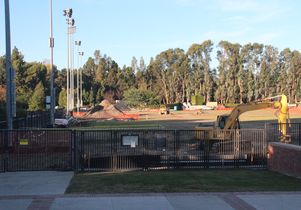
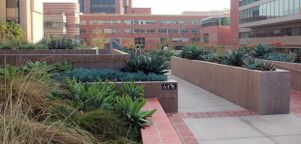
The new artificial turf on the intramural field and other places combined with drought-tolerant landscaping from five large projects, could save 11.3 million gallons annually.
Using UCLA environmental research, the Los Angeles City Council passed a motion to develop a program to improve energy and water conservation efforts in city buildings that consume the most resources.
Six proposals led primarily by UCLA units are vying with 261 others for grant funding by the Goldhirsh Foundation, which is hoping to jump-start projects that will make L.A. the best place to play, to connect, to live, create and learn by 2050.
Water researchers from UCLA, the Natural History Museum and elsewhere are helping the region understand issues, history and possible solutions related to the drought. A discussion series featuring panels of experts begins July 10.
Alex Hall, a professor in UCLA’s Department of Atmospheric and Oceanic Sciences and Institute of Environment and Sustainability, appears in “Years of Living Dangerously,” airing June 2 on Showtime, and explains how climate change will impact our lives.
With the worldwide celebration of Earth Day taking place this week in more than 190 countries, a number of organizations have taken note of UCLA’s commitment to sustainability and environmental excellence.
With about 70,000 people and the water needs of a small city, UCLA can take small steps toward conservation during California’s drought that will add up to big savings.
A major new environmental research project is the first of UCLA's six Grand Challenges, which aim to address pressing societal issues through multidisciplinary innovations and breakthroughs.