While the experts agreed on the need to reduce greenhouse gas emissions, they sharply divided on how to achieve that goal at a recent discussion sponsored by the UCLA Institute of the Environment and Sustainability.
Tata Power Delhi Distribution Limited and researchers at UCLA have reached an agreement to develop advanced technologies for delivering energy more efficiently, less expensively and to more people in India and beyond.
The UCLA Sustainable LA Grand Challenge’s first competitive research grants will go to 11 projects, ranging from developing lightweight solar panels that double as batteries to studying the costs of algae-based biofuels.
Among the topics discussed at the inaugural UCLA-Tata Global Forum in New Delhi were sustainable megacities, the integration of solar power into smart energy grids and sustainable biological fuels.
There are more than 100 research projects that will help conserve, invent and incentivize the county to fully renewable energy, 100 percent local water and a healthier ecosystem.
From less electricity generated by coal to more whales in California, UCLA Institute of the Environment and Sustainability director Peter Kareiva offers things to be thankful for.
Jon Christensen writes that to take these solutions from UC-wide to a global scale, we’ve got to start now using a combination of technology, outreach and policy.
The new cell construction extends the cell’s effective life in air by more than 10 times, with only a marginal loss of efficiency converting sunlight to electricity.
By combining never-before–released data from energy utilities with public data, UCLA researchers created a database that provides an unprecedented look at the energy-use landscape.
A team of engineers from the UCLA Henry Samueli School of Engineering and Applied Science, in partnership with Southern California Edison, has received a $1.62 million grant to build a hybrid energy storage system.
Fuel cells and hydrogen batteries are already important sources of green energy, but further advances will require scientists and engineers to better understand how the technologies work.
A new technology developed by chemists at UCLA is capable of storing solar energy for up to several weeks — an advance that could redefine the way scientists approach solar cell design.
New compact, reliable energy storage devices outperform batteries by holding larger amounts of energy, recharging more quickly and lasting for longer recharge cycles.
UCLA students are going dark for Earth Hour on March 28, by turning off the lights free for an hour to join the international event raising awareness about climate change and energy usage.
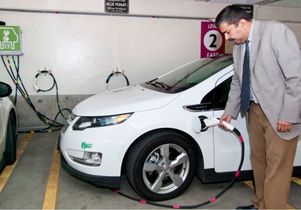
As the UC system marches toward its goal of carbon neutrality by 2025, UCLA is doing its part by using less energy in buildings, converting half of its fleet to alternative-fuel vehicles and adding LEED-certified green buildings.
Expanding customer access to energy data can bring cleaner, more efficient power to Californians, save money and boost emerging clean technologies, according to a new report by the Climate Change and Business Research Initiative, a partnership between UCLA and UC Berkeley schools of law.
People told how much cancer-causing pollution they could prevent were more likely to change their power usage than people told how much money they could save.