Students at a high school in La Cañada Flintridge participate in a School of Nursing research project on congenital heart disease at the request of a beloved teacher.
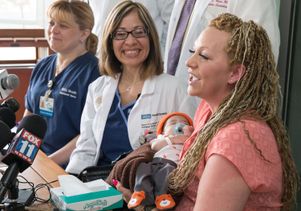
Born with a heart defect that couldn’t be fixed with surgery, a baby receives a heart transplant at 23 days old. Five-week-old Dravyn Johnson left Mattel Children’s Hospital UCLA for home today with his mother.
The American Heart Association’s Get With The Guidelines – Heart Failure Gold-Plus Quality Achievement Award recognizes the hospital’s work implementing quality improvement measures.
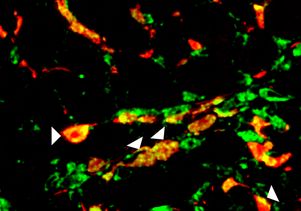
UCLA researchers have discovered that some scar-forming cells in the heart, known as fibroblasts, have the ability to become endothelial cells — the cells that form blood vessels.
Forty years ago, it was unthinkable to live a life with an artificial heart, with someone else’s transplanted heart or with an assist-heart pump. Today, the technological advances of modern medicine make this possible. But how does that change a human being?
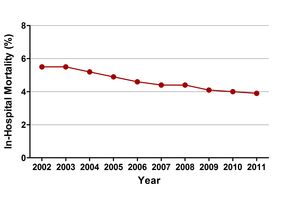
Changes in the treatment of the most common form of heart attack over the past decade have been associated with higher survival rates for men and women regardless of age, race and ethnicity, according to a UCLA-led analysis.
Extracorporeal membrane oxygenation is normally reserved for transplant recipients, but quick-thinking hospital staff used it on James Manzi, who looks forward to 80th birthday April 6.