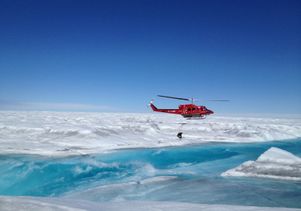
Jon Christensen writes that to take these solutions from UC-wide to a global scale, we’ve got to start now using a combination of technology, outreach and policy.
The models predict that the area burned by Santa Ana fires will increase by 64 percent and the are burned by non-Santa Ana fires will increase by 77 percent.
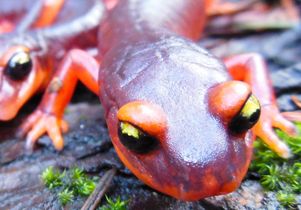
Researchers from the UCLA Institute of the Environment and Sustainability call for a federal ban on salamander imports to prevent a deadly pathogen from coming here.
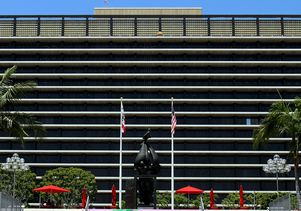
Mark Gold writes in the L.A. Times that to meet the mayor’s goal of reducing imported water by 50 percent by 2025, we must all pay more to upgrade infrastructure and invest in new projects.
Researchers at the UCLA Institute of the Environment and Sustainability recommend that state officials adopt best practices for monitoring leaks and measuring water loss.
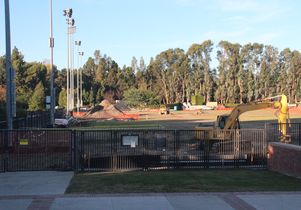
Switching the IM Field to artificial turf saved UCLA nearly $700,000 through the DWP’s commercial rebate program, similar to the rebate program for homeowners who replace their lawns.
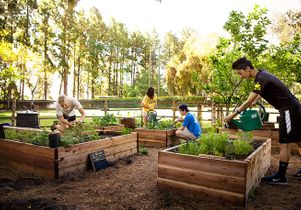
UCLA Residential Life’s Sustainable Living Community and the Education for Sustainable Living Program at UCLA have won awards given to honor innovation at UC and CSU campuses.
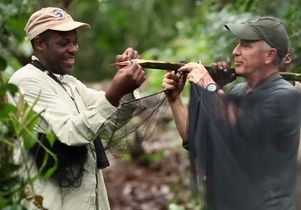
The Congo Basin Institute in Cameroon will provide a one-of-a-kind center to address the challenges of food and water security, climate change, biodiversity loss, public health and emerging diseases.
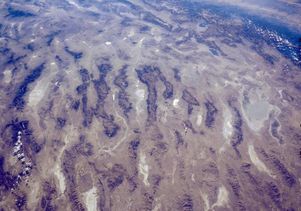
Glen MacDonald writes that rising temperatures, groundwater depletion and a shrinking Colorado River mean the most populous U.S. state will face decades of water shortages and must adapt.
Jon Christensen writes that artist Michael Heizer’s monumental sculpture called “City” best embodies the Western ethos of humanity’s role shaping and adapting to the vast open expanse.
The new artificial turf on the intramural field and other places combined with drought-tolerant landscaping from five large projects, could save 11.3 million gallons annually.
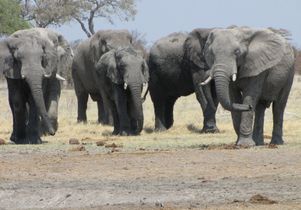
The loss of elephants, rhinoceroses and hippopotamuses would have drastic implications not only for the species themselves, but also for other animals and the ecosystems in which they live.
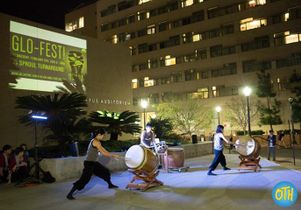
UCLA students are going dark for Earth Hour on March 28, by turning off the lights free for an hour to join the international event raising awareness about climate change and energy usage.
After nearly a month of turning off the lights, doing laundry with cold water and taking the stairs instead of the elevator, UCLA students are currently a close second in a competition among residence halls to see which UC campus can save the most energy.
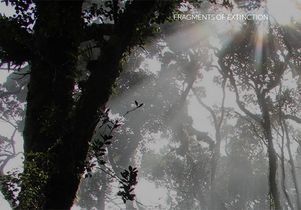
'Fragments of Extinction: An Environmental Sound-Art Project on the Acoustic Biodiversity of Rainforests' will be presented on Thursday, Feb. 26, 5:30 p.m. at the California NanoSystems Institute.
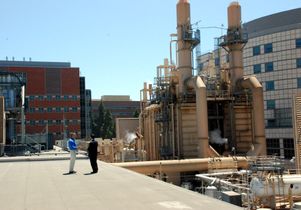
As the UC system marches toward its goal of carbon neutrality by 2025, UCLA is doing its part by using less energy in buildings, converting half of its fleet to alternative-fuel vehicles and adding LEED-certified green buildings.
People told how much cancer-causing pollution they could prevent were more likely to change their power usage than people told how much money they could save.
Using UCLA environmental research, the Los Angeles City Council passed a motion to develop a program to improve energy and water conservation efforts in city buildings that consume the most resources.
Plants worldwide are more sensitive to drought than many scientists realized. The research may improve predictions of which plant species will survive climate change.