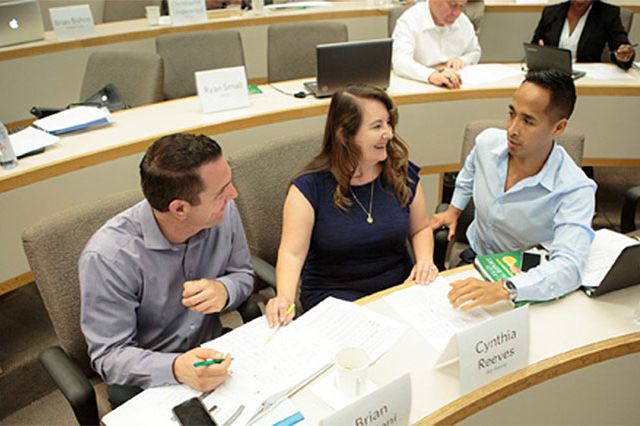
Cynthia Reeves acknowledges the uncertainty she felt when she was medically retired from the U.S. Air Force in 2014, a process that took about two and a half years after she was medevaced out of Iraq. “I wasn’t sure physically or mentally where I was going to be,” Reeves said. “I had expected a whole different life than what I was living.”
Reeves trained as a meteorologist in the military and eventually “taught weather” at a large training school in Mississippi. The New Mexico native had, like anyone who’s been in the service for 14 years, moved around quite a bit — to South Carolina originally, with four years in the interior of Alaska, then on to Mississippi, eventually landing in Tucson, Arizona. With no background or schooling in real estate, she moved entirely outside her comfort zone and partnered with an architect to develop a four-unit building as income property.
It may be a lucky thing for Reeves that deal after deal fell through because, while attending a small business conference for veterans, she learned from a fellow participant about UCLA Anderson’s Entrepreneurship Bootcamp for Veterans with Disabilities (EBV), which began July 11 and runs through Sunday. She researched the program and knew instinctively that it would help her determine the feasibility of her enterprise.
By the time she started the 30-day intensive online portion of the EBV course (when “a lot of reality checks occur,” she said), Reeves and her partner knew they should scale their development to house more people. Reeves said that the military often moves its people off base in the summer and houses them in hotels, where there may be no laundry or kitchen facilities.
Reeves found it to be an arduous process and not exactly cost-efficient for the government. While in Mississippi, she noticed a condominium complex that tended to rent to students for nine months out of the year and many active-duty service personnel over the summer. She decided to establish rentals (called the Howard Street Lofts) near Tucson that would cater to these two populations in a similar way, providing key amenities — such as allowing pets in at least some of the units — in a short-term rental.
So far, what she’s learned at EBV has surpassed her expectations. Not only has the course covered basic small business tenets and lessons in entrepreneurial agility, but she has benefited from wholly unexpected elements as well, like introductions to successful real estate professionals and a benefits briefing that surprised everyone in the EBV group.
Instructor Janet Steveley from Griffin-Hammis Associates offered a primer on specific benefits that Reeves and her classmates never knew existed. “She didn’t bring up the usual things we all know about,” Reeves said. “She told us about ways of getting grants or getting equipment paid for.”
Within her first couple of days on campus, Reeves was inspired enough to confer with her fiancé about launching two businesses at once — and they are now set to purchase a restaurant near their home in Arizona.
“The lofts will be my golden goose,” said Reeves, who plans to be fiscally conservative until her loan is paid off, but will still be donating 10 percent of her profits to various charities, like autism causes or the Wounded Warrior Project. “These things have helped shape my life.” Of the restaurant she said, “I think the restaurant is going to be our lifestyle business — to get my kids involved, teach them a good work ethic.
“EBV validated my wanting to be in business for myself. It validated everything that I’m thinking. I feel like I’m going to be able to do this,” she said.
Reeves places a premium on learning alongside other veterans and doesn’t feel competitive in what some might imagine is a finite pool.
“There’s enough room for all of us to make it,” she said. “The more of us who make it, the better we can educate other people about veterans’ issues.”
This story is posted on the UCLA Anderson School website.