An infant is born prematurely at 22 weeks, weighing only about one pound and with bleeding in the brain. He tentatively clings to life, but in light of the fact that there is minimal likelihood he will recover a level of functional mental capacity, one question looms: How aggressively should he be treated?
Elsewhere in the hospital, a grief-torn family hopes for a miracle and presses doctors to assertively treat their loved one, even though the medical team has concluded that further intervention is futile and would instead cause the patient increased pain and indignity.
From life’s beginning to its end, and at all points in between, there are opportunities for vexing ethical dilemmas to arise. And in this era of advanced technology, those opportunities are on the rise.
 Cases in which patients or their families seek treatment that physicians judge non-beneficial or even harmful are among the most common, but they are far from the only ones.
Other troubling scenarios involve seriously ill patients who want to leave the hospital or who refuse interventions deemed critical to their recovery. When patients can decide for themselves, their autonomy is honored. But what if it isn’t clear whether or not they have the mental capacity to make an informed decision? An advance directive can serve as a guide to the patient’s desires, but even when one exists, there is considerable gray area.
Such issues create a maze of conflicting choices for health care professionals as well as patients and their families.
To provide guidance, the UCLA Health Ethics Center stands ready to help. The center draws on campus experts from many fields — medicine, nursing, public health, social work, spiritual care and law — to help find humanistic and compassionate solutions to resolve difficult ethical situations that inevitably unfold in health care settings.
“Hospitals that develop and provide cutting-edge medicine need a mechanism to balance complicated medical and ethical issues,” explained Dr. Neil Wenger, the center’s director. “Academic medical centers such as UCLA often confront complex questions of life and death. We help patients, their families and clinicians through the process of negotiating difficult ethical decisions.”

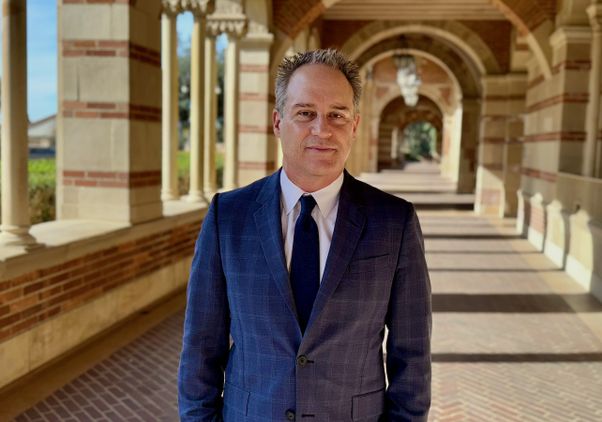
Dr. Neil Wenger, director of the UCLA Health Ethics. Photo by Margaret Sison Photography.
“These wonderful technologies were designed to be temporary — to sustain someone who is experiencing a health crisis, but who is expected to get through it and to be liberated from these machines,” said James Hynds, the center’s clinical ethicist. “It was not envisaged at their inception that these machines would be used on a long-term basis, and certainly not, in some cases, for the rest of the patient’s life.”
Prior to the mid-20th century, Hynds noted, physicians had little to offer seriously ill patients to keep them from dying. Technology eventually created a range of interventions that could keep patients alive for weeks, or even months, but often in a debilitated, burdened state.
Hynds believes that, until recently, too many doctors provided these interventions whenever requested by families without giving due consideration to what it would mean for patients or how it would change the practice of medicine.
“The purpose of medicine cannot simply be to keep people alive for as long as possible in the absence of health and well-being,” Hynds said. “Medicine doesn’t exist to make dying more painful, more inhumane. But these devices, when continued inappropriately once it has become obvious the patient cannot recover, have the potential to allow the disease to take a tighter grip on the patient, ultimately producing a death that is much more cruel than anything nature herself could devise.”
Hynds believes there is a growing appreciation among physicians that medicine should be about healing and bringing a degree of wholeness to the patient. That can be achieved, he said, through palliative care, even as the physician is letting nature take its course and allowing the patient to die.
High-tech interventions used outside of critical-care units, such as the ventricular-assist device (an artificial heart designed to serve as a bridge to transplantation), also save lives, but they, too, have forced providers to wrestle with difficult ethical questions.
“When using advanced technology, there are some situations in which it may be more likely that the patient will die, or that the therapy will place the patient into an adverse health state rather than actually achieving the intended benefit,” Dr. Wenger explained. “That doesn’t mean that a rescue should not be attempted, but it dramatically increases the responsibility of physicians to ensure that patients, and those making decisions for them, are fully informed about the pros and cons of using that technology.”

James Hynds, the center's clinical ethicist.
Dr. Rajan Saggar, director of the medical intensive-care unit at Ronald Reagan UCLA Medical Center, said he appreciates the role Hynds and other ethics center experts play as a liaison between health care providers and patients and their families during difficult times. “The family and the physicians have the same goals, but often there are differences over what is attainable,” he said. “To have experts who come without any biases and can act as a third-party in moving the decision process forward is invaluable.”
Rebecca Seixas found herself in the difficult role of a surrogate decision-maker when her close friend suffered a massive stroke and was being kept alive by a breathing machine. After unsuccessful attempts to take her friend off of the breathing machine to see if she could survive on her own, nurses asked Seixas, in the absence of any other close friends or family members, whether or not the patient, given her poor prognosis, would want to continue with the aggressive intervention. Sexias had never discussed such a situation with her friend.
The case was considered by the ethics committee, which assembled people who knew the patient best and could discuss what she would have wanted. The committee ultimately recommended withdrawing the life support and shifting to palliative care.
“Everyone made me feel so comfortable,” said Seixas, who provided input to the committee. “To have the discussion and hear that everything possible had been done, all protocols had been followed and that she wasn’t going to improve, gave me the courage to say that I didn’t think she would want this.”
Understandably, emotions can run so high for families with critically ill loved ones that the decision-making environment can be extremely tense. When she is called in to consult, Katherine Brown-Saltzman, the ethic center’s co-director and assistant clinical professor in the UCLA School of Nursing, said her initial goal is to create the “moral space” to enable conversations to occur.

Courtesy of the UCLA Health Ethics Center.
Often, the staff of the ethics center will bring in experts from other disciplines to assist. Dr. David Wallenstein, a physician with the Santa Monica/UCLA Palliative Care Service, is frequently called on for end-of-life cases in which families are pushing for aggressive care that the health care team deems pointless.
“These are heart-rending situations,” Dr. Wallenstein said. “The patient is receiving treatment that is painful and non-beneficial, and the grieving family has alienated the health care personnel with their insistence that certain treatments be given, based on their desire to do what they believe is right.”
His challenge in these cases is to work with the family and health care team to develop a treatment plan in which the patient will be more comfortable, while the family feels its wishes are being honored.
When families have spiritual questions or needs, a chaplain can be called in to consult. Often these situations, too, involve end-of-life cases in which families are at odds with the health care team’s recommendation to withdraw aggressive treatment. “Some families may say that they’re waiting for a miracle, and it’s often the chaplain’s role to go beyond the stated belief in a miracle, see the family’s pain, and do some grief and spiritual counseling to help them let go,” said the Rev. Karen Schnell, director of UCLA Health’s Spiritual Care Department.
Chaplains are also called to consult when patients or family members are not sure whether or not a procedure such as organ transplantation or an unusual fertility treatment is endorsed by the patient’s faith. In some cases, a patient’s religious values conflict with a physician’s moral imperative to provide lifesaving treatment, such as when the patient’s beliefs preclude receiving a blood transfusion.
“Our task is to use our special training to listen to people’s deepest concerns and discern what is underneath the words being spoken,” said the Rev. Timothy Thorstenson, who manages the Spiritual Care Department at UCLA Medical Center, Santa Monica. “Once we establish the family’s awareness of the existential struggles they are dealing with, we try to help them move through that struggle in a way that provides meaning in the midst of this awful situation.”

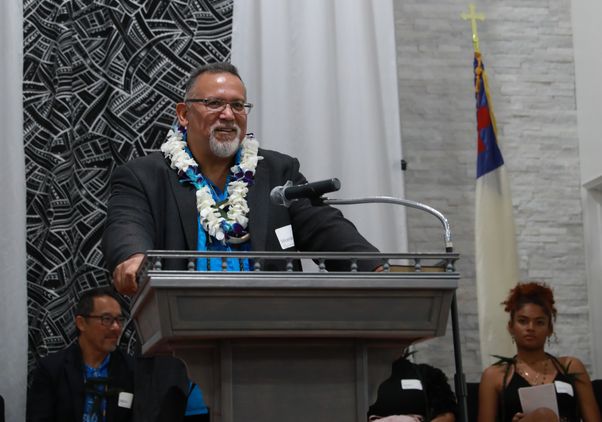
The Rev. Karen Schnell heads UCLA Health's Spiritual Care Department. Hospital chaplains are sometimes called in to consult when families disgree with a health care team's recommendation to withdraw aggressive treatment. Photo by Margaret Sison Photography
On the other hand, patients have the right to decline to follow the recommendations of health care professionals — as long as these patients have the capacity to decide what’s in their best interest. “If, after a series of formal and informal tests, patients are demonstrated to lack insight into their own circumstances, we wouldn’t allow them to make a decision that would result in harm,” Hynds explained. “We would treat them, so they could return to a state of being capable of exercising autonomy.”
The multidisciplinary ethics committee meetings also can provide assurance to physicians facing complex decisions. Dr. Mousa Shamonki, a UCLA reproductive endocrinologist, has twice requested that his cases go before the committee. “Both were situations in which patients made unusual requests, and I wasn’t comfortable acting on my own,” he said.
In each case, Dr. Shamonki and the patient presented the background and their perspectives to the committee, which then held lengthy discussions before having members weigh in. “It was extremely helpful to have a consensus statement that sorted out the issues that needed to be considered,” he said.
Meanwhile, the center continues to promote awareness in UCLA’s hospitals, employing what Brown-Saltzman says is one of the busiest consultation services in the country.
“If you have a lone ethicist trying to do consultation work, or you just have an ethics committee that meets once a month and tries to do a few consults, you are missing a huge swath of everyday issues that clinicians are struggling with,” she said.
“As a center, we are trying to create an environment in which ethical issues are seen as a routine part of clinical practice," Brown-Saltzman said. "Most of these cases are not black-and-white, which is why we are brought in — to get at core values and translate those values into good care.”
______________________________________________________________________________________________
This is an edited version of a story that originally appeared in the 2013 summer edition of U Magazine, published by UCLA Health System and the UCLA David Geffen School of Medicine.