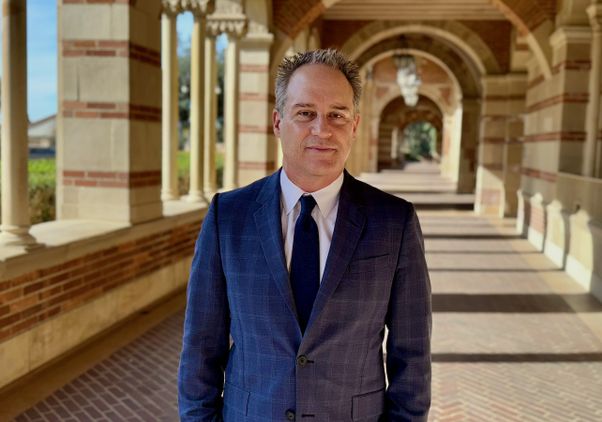
Professor emeritus of anthropology Peter Hammond, who traveled the world for his academic studies and ethnographic research, died on Oct. 4 in Los Angeles. He was 86 and had Alzheimer's.
His expansive ethnographic research in Africa earned him posts as a consultant to numerous high-profile organizations in Washington, D.C., among them the World Bank and the National Geographic Society.
Born in Glendale, California — in an autobiographical profile, Hammond credited 14 years of “experiential deprivation in Glendale” with his decision to "escape into anthropology" — Hammond was raised by his mother, Ruth, who worked as a seamstress and a clerk at Woolworth’s. He left California to attend the Universidad de Puerto Rico and, in 1951, earned a B.A. in anthropology from Universidad de las Americas in Mexico. He did post-graduate studies in Paris at the Sorbonne, conducting fieldwork in the impoverished French colonies of Upper Volta and Mali, West Africa, where he studied the cultural effects of technological innovation and economic change imposed upon a traditional way of life.
After earning a Ph.D. in African studies and anthropology in 1962 from Northwestern University, Hammond held faculty posts at the University of Pittsburgh, Indiana University and Johns Hopkins University.
He also served as executive secretary of the Division of Behavioral Sciences at the National Academy of Sciences, a post from which he resigned in 1965, citing the academy’s involvement in the Vietnam War.
In 1971, Hammond’s book “Introduction to Cultural and Social Anthropology” was published. The book was adopted as a key text in undergraduate courses nationwide, as well as in four additional books, some 60 journal articles and book chapters.
In 1981, Hammond joined UCLA, where he thrived for 33 years in a variety of roles. He served as acting chair of the anthropology department’s Program of African Studies, co-chaired the Development Studies Program and continued to conduct field research around the world. In 1996, he received the Luckman Award for Distinguished Teaching. He also chaired the Chancellor's Task Force on Lesbian, Gay, and Bisexual Studies, which led to the establishment of UCLA's LGBT Studies Program in 1997.
Although he retired in 2012 due to Alzheimer’s disease, the condition “did not diminish the core of Hammond’s intelligence and sense of fun,” wrote his daughter, Alexandra Isfahani-Hammond, an associate professor of comparative literature at UC San Diego, in an obituary. “Dapper and charming until the end, he adopted an ethnographic stance toward his disease, regaling his caregivers and dear friend, Carlos A. Brown, with quips in English, Spanish and French and observing the absurdity of his condition until he ultimately passed away in his daughter’s arms.
“Asked near the end what was important in life,” she wrote, “his reply was ‘Falling in love, love in general, figuring it out ... and dogs.’"
Hammond was preceded in death by his wife, Fatmeh (Azar) Isfahani-Zadeh. He is survived by their daughter, Isfahani-Hammond. In lieu of flowers, memorial donations may be made to Compassion and Choices.