Almost a year after researchers at the UCLA Anderson School of Management and the State University of New York–Stony Brook released a study showing that the unemployed face discrimination in the hiring process because of their jobless status, the New York City Council overwhelmingly passed legislation prohibiting such bias.
The landmark bill, which passed 44 to 4 on Jan. 23, would make it illegal under the city’s human rights law for an employer to base a hiring decision on an applicant’s unemployed status. It also would prohibit employers from posting job advertisements that require applicants to be currently employed.
 If enacted, the bill, which now awaits Mayor Michael Bloomberg’s approval, will become the first to give unemployed people the right to sue in court or file a complaint with the city’s Human Rights Commission if they feel they were unlawfully discriminated against by a potential employer because they are jobless. Although Bloomberg has indicated he would veto the bill, NYC Council Speaker Christine Quinn has stated the council would vote to override a veto.
 “This is a chicken-and-egg which-comes-first issue — how can we get New Yorkers back to work if they can’t even get an interview because they are out of work?” asked Councilmember Debi Rose, chair of the council’s civil rights committee, in a city press release before the vote. “And the answer is that they must at least have a fair shot, if qualified, of being able to put forth their case for a job.”
Geoff Ho, lead researcher in the study and a Ph.D. candidate in management and organizations at the UCLA Anderson School, said he was glad to learn that the New York City Council and their staff members were made aware of the study’s findings as they crafted final legislative language in and communications about the bill.
Quinn specifically referred to the study during a press conference she led before the council’s vote.

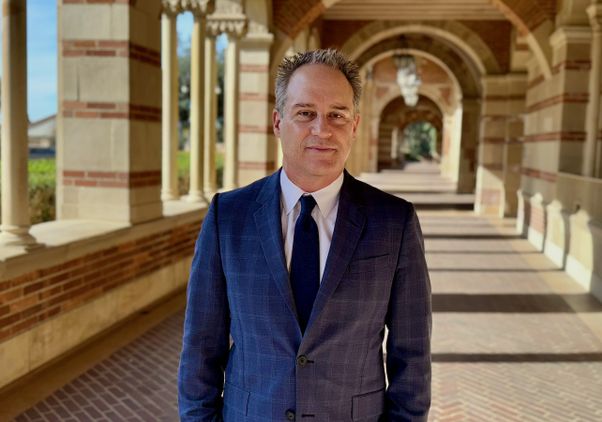
Geoff Ho, Ph.D. candidate in the UCLA Anderson School.
Participants in the study — HR professionals as well as people who were recruited from the general population — were divided into two groups and given an identical set of resumes of job applicants. One group was told that the job applicants were currently employed. The other group was told the applicants had been unemployed for about a month. Participants were then asked to evaluate the job candidates.
Even with this short duration of unemployment, jobless applicants were stigmatized as being less competent and less hirable, Ho explained. “We actually saw the biggest effects with the HR professionals,” he said. Even study participants who were students — unemployed themselves — showed a bias by finding the unemployed applicants less competent and less hirable. “So here we have unemployed people stigmatizing themselves,” Ho said.
In a related study, participants were shown a short video of a job interview instead of a resume and were told that the job candidate was either employed or unemployed. The same biases against the unemployed job candidate held in this study as well.
Ho worked with a team of researchers that included Margaret Shih, a co-author on the study and an associate professor of management and organizations at UCLA Anderson; Todd Pittinsky, associate professor of technology and society at Stony Brook; and Daniel Walters, a UCLA Anderson Ph.D. student. They also examined whether biases existed if the job candidate were laid off, quit voluntarily or had to leave a job because the employer went bankrupt.
“The only rationale that alleviated stigma was when the employer went bankrupt,” Ho said. “In this case, the rationale for unemployment completely lays the blame for joblessness outside of the employee.”
The other two scenarios appeared, at least to the participants, to lay at least part of the blame on the employee. “If the person was laid off, you could still reason, ‘Well, that person was a low performer.’ With those who voluntarily left, you could still infer that something was wrong with their motivational or commitment levels,” Ho explained.
 While many people have long suspected that the deck is stacked against the unemployed, Ho said, it was surprising to find that this bias existed even against job applicants who were only a month out of the job market.
 The New York City bill, which stipulates that there are certain circumstances where an employee can reasonably consider an applicant’s unemployment, is a “great first step in raising awareness of this problem,” Ho said.
Both New Jersey and Oregon have passed laws prohibiting employers from placing job ads that exclude the unemployed from applying. The District of Columbia has also passed comparable legislation, but the D.C. bill went further, amending the district’s civil rights laws to prohibit employment discrimination against the unemployed at all stages of the hiring process.
In California, a similar bill was introduced in the Assembly in January, 2012, but it was vetoed by Gov. Jerry Brown in September for, Brown said, being revised as it went through the legislative process and becoming “changed in a way that could lead to unnecessary confusion.”
An advocate for the National Employment Law Project (NELP), a nonprofit organization that helped push for the NYC bill, said the UCLA–Stony Brook study’s findings were valuable in the fight to protect the unemployed from job discrimination.
“Overall, it was very helpful in making the case that exclusionary discrimination against unemployed candidates in the hiring process is neither a rare nor a local phenomenon,” said Mitchell Hirsch, campaign associate with NELP.