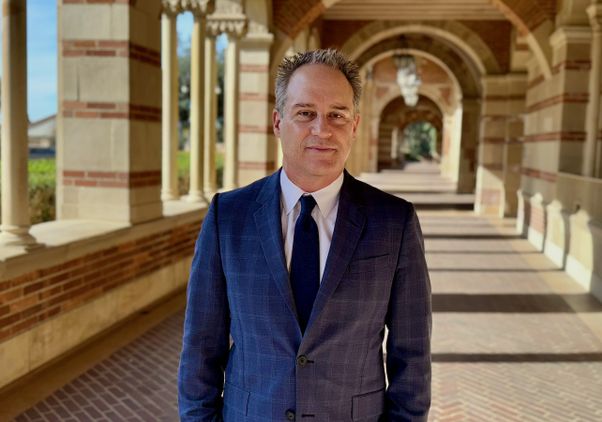
 Beginning Friday, Nov. 1, scholarly articles authored by faculty members at UCLA, UC Irvine and UC San Francisco and appearing in scholarly publications are now being made widely available at no cost to the public. All faculty who are members of the Academic Senate at these campuses will be depositing copies of their work in eScholarship, UC’s open-access repository, or other open-access databases or publications. The launch of this new policy at three campuses a year before it takes effect systemwide comes after the Academic Council, the leadership group of the Academic Senate of the University of California, adopted it last July. The policy has been in development for six years. It “sends a powerful message that faculty want open access, and they want it on terms that benefit the public and the future of research,” said UCLA associate professor of information studies Christopher Kelty, who headed the systemwide committee that oversaw the policy’s development. UCLA Today’s Cynthia Lee had the opportunity to ask Kelty about the policy.
Why is this open-access policy necessary?
UC is the largest public research university in the world, and its faculty members receive roughly 8 percent of all research funding in the U.S. With this policy, faculty are making a commitment to make this publicly funded research widely available to all and no longer just available through scholarly publications. It signals to these publishers that open access, as defined by faculty and not them, must be part of any future scholarly publishing system.
UC is the largest public research university in the world, and its faculty members receive roughly 8 percent of all research funding in the U.S. With this policy, faculty are making a commitment to make this publicly funded research widely available to all and no longer just available through scholarly publications. It signals to these publishers that open access, as defined by faculty and not them, must be part of any future scholarly publishing system.
Who does it affect?
 When it goes systemwide next year, more than 8,000 UC faculty on all 10 campuses will be practicing open access. This means the public will have access to as many as 40,000 articles a year at no cost. More than 175 other universities have adopted similar open-access policies, including Harvard, Stanford, MIT, Duke and Princeton. By granting a license to the University of California to make articles openly accessible prior to any contractual arrangement with publishers, faculty members can make their research publicly available, re-use their research for various purposes and modify it for future publications. Previously, scholars had very limited rights over the distribution of articles.
Other than that, many practices will remain the same. Faculty will continue to choose where to publish. Their work will still appear in the most prestigious journals across all fields. Articles will continue to undergo rigorous peer review, and they will continue to meet UC’s high standards.
What’s wrong with the current system of publishing?
Right now, it’s in crisis mode. Subscription costs that are paid by academic libraries who want access to faculty’s scholarly articles have skyrocketed. The total cost for subscriptions systemwide as of 2011 was $39 million. While library revenues have been dropping for decades, profit margins for the largest for-profit publishers have steadily increased and now stand at between 30 percent and 40 percent. So while faculty provide all the content and most of the labor in terms of authorship, copyediting and editorship, among other tasks, they are losing access to this content because libraries have had to cancel subscriptions. Meanwhile, publishers are seeking greater control over content and its uses.
When it goes systemwide next year, more than 8,000 UC faculty on all 10 campuses will be practicing open access. This means the public will have access to as many as 40,000 articles a year at no cost. More than 175 other universities have adopted similar open-access policies, including Harvard, Stanford, MIT, Duke and Princeton. By granting a license to the University of California to make articles openly accessible prior to any contractual arrangement with publishers, faculty members can make their research publicly available, re-use their research for various purposes and modify it for future publications. Previously, scholars had very limited rights over the distribution of articles. Other than that, many practices will remain the same. Faculty will continue to choose where to publish. Their work will still appear in the most prestigious journals across all fields. Articles will continue to undergo rigorous peer review, and they will continue to meet UC’s high standards.
What’s wrong with the current system of publishing?
Right now, it’s in crisis mode. Subscription costs that are paid by academic libraries who want access to faculty’s scholarly articles have skyrocketed. The total cost for subscriptions systemwide as of 2011 was $39 million. While library revenues have been dropping for decades, profit margins for the largest for-profit publishers have steadily increased and now stand at between 30 percent and 40 percent. So while faculty provide all the content and most of the labor in terms of authorship, copyediting and editorship, among other tasks, they are losing access to this content because libraries have had to cancel subscriptions. Meanwhile, publishers are seeking greater control over content and its uses.
So is open access a solution to this crisis?
Not a solution, but a necessary component of any future system. Publishing has costs that someone has to pay for, but it shouldn’t be the public that has already paid for the research to be done.
Not a solution, but a necessary component of any future system. Publishing has costs that someone has to pay for, but it shouldn’t be the public that has already paid for the research to be done.
What if a publisher objects to open access and demands that faculty embargo or delay access, or opt out in order to publish an article?
First of all, there is a very long list of publishers who already allow open access. Only a handful of large publishers object to these policies. If they do, you can specify your publisher’s embargo requirement so that your article can become immediately available to the public after the embargo deadline has passed. Or faculty can opt out of this policy permanently. The policy allows this on a per-article basis.
First of all, there is a very long list of publishers who already allow open access. Only a handful of large publishers object to these policies. If they do, you can specify your publisher’s embargo requirement so that your article can become immediately available to the public after the embargo deadline has passed. Or faculty can opt out of this policy permanently. The policy allows this on a per-article basis.
Doesn’t the opt-out option mean the policy has no teeth? Won’t publishers just demand that all authors opt out?
It’s important to understand that the policy balances academic freedom with the public interest — there has to be some kind of opt-out clause in order for faculty to make decisions in the interest of their research and academic goals. The down side is that publishers can take advantage of this clause. But in reality very few are doing so, and those that do are asking primarily for a six-month or 12-month embargo on the publication.
It’s important to understand that the policy balances academic freedom with the public interest — there has to be some kind of opt-out clause in order for faculty to make decisions in the interest of their research and academic goals. The down side is that publishers can take advantage of this clause. But in reality very few are doing so, and those that do are asking primarily for a six-month or 12-month embargo on the publication.
Are there other benefits to having an open-access policy?
We believe that it will help to accelerate the pace of research, discovery and innovation by advancing knowledge and encouraging an easy exchange of new ideas and services. In the end, open access will benefit not just researchers and the public, but educational institutions, businesses and research funders.
We believe that it will help to accelerate the pace of research, discovery and innovation by advancing knowledge and encouraging an easy exchange of new ideas and services. In the end, open access will benefit not just researchers and the public, but educational institutions, businesses and research funders.
_____________________________________________________________________________________________
To learn more, see this FAQ on the new policy. Also, see Kelty’s Powerpoint presentation that was recently given to members of the Legislative Assembly of the UCLA Academic Senate.
To learn more, see this FAQ on the new policy. Also, see Kelty’s Powerpoint presentation that was recently given to members of the Legislative Assembly of the UCLA Academic Senate.