If you thought the issue of segregation in schools was an urban problem that was ultimately solved with the past victories of the civil rights movement, Gary Orfield, co-director of the Civil Rights Project at UCLA, is asking you to take another look, but at America’s suburbs where re-segregation is taking hold.
"What is happening with suburban schools today in many areas is like what happened to urban schools in the 1950s and 1960s," said Orfield, a professor of education, law, political science and urban planning. "No effort is being made to create stable, lasting integration. Families of color are moving in, and a lot of whites are moving out. And since all the population growth in the country is non-white — and since the West and the South are already predominantly non-white in school enrollment — this is going to continue."  Orfield’s latest book, "The Resegregation of Suburban Schools: A Hidden Crisis in American Education" (Harvard Education Press, 2012), which he has co-edited Erica Frankenberg, an assistant professor in education policy studies in the College of Education at the Pennsylvania State University, looks at patterns of demographic change and the strategies that school officials and community leaders can employ to improve opportunities for suburban, low-income students and students of color.
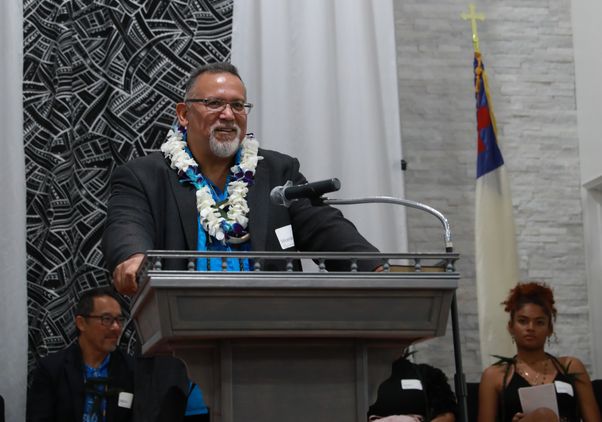
Gary Orfield
Suburbia started booming as white people began making their exodus from the cities. "You’d get a small home for very little money down, often with federally guaranteed loans, and it increased greatly in value," Orfield said. But developers rarely sold to blacks or Latinos as the suburban boom took hold.
"Now, with fair housing in operation," said the professor with the Graduate School of Education & Information Studies (GSE&IS), "you see this huge movement in the L.A. area of middle-class black and Latino families out to the Inland Empire and to other communities that have now been devastated by predatory lending and the foreclosure crisis."
But while many families of color now have the means to live in middle- to upper-middle class areas, housing discrimination still exists, according to current data cited by Orfield and Frankenberg. When two different sets of homebuyers — one white and one non-white — report similar incomes and housing desires, they are often sent to different communities by realtors to look for homes, Homebuyers of color usually get listings only in non-white and changing communities.  Resegregation by race usually leads to further segregation by income, which has far-reaching effects on the quality of housing, local economy, and ultimately, the quality of education, he explained.
Resegregation by race usually leads to further segregation by income, which has far-reaching effects on the quality of housing, local economy, and ultimately, the quality of education, he explained."The communities experience disinvestment, loss of job base, a decline in their housing market and schools that are deeply disadvantaged," he said. "And, of course, these schools tend to become much less competitive and much less strong as the path to college."
Orfield underscores the deficiencies that exist in resegregated, high-poverty schools and the end result for students living in these communities and left with no access to special support, such as remediation classes.
"These are the schools that are the dropout factories," he noted. "These schools don’t have AP courses and have low levels of competition, with no pre-collegiate courses where students acquire necessary pre-collegiate skills. You tend to get a very unequal preparation for college.
"If you’re in a middle-class school where everybody’s going to college and the families have a lot of resources… the school understands, assumes that everybody is going to college and provides a clear path with strong support. But if you’re in a poor school, the assumption often is that you’re not going to college; the best you’re going to do is go to a community college for a while."
Orfield advocates "policy that tries to help communities that become diverse, handle it successfully in the schools, fight discrimination and develop a coordinated effort to remain diverse.
"Communities that stabilize as diverse communities have a lot of success," he said. "I lived in one in Chicago, one in Washington, and one in Cambridge, Massachusetts. They are great places to live. They’re interesting and everybody wants to live there, so the housing market is vibrant. They tend to produce good, high-achieving, and stimulating schools where teachers like to stay. Sadly, teachers systematically leave re-segregating schools."
A longer version of this story is available at Ampersand, a web publication of GSE&IS.