
'Street Talk' students (left to right) Dai Jung Chung, Jiu Hua Zhang, Hussain Alsherhri and Reema Aldahlawi. Photo by Celia Soudry.
“I was called a ‘dork’ and didn’t know what that meant,” he recalled, adding that he was too nervous to ask anyone to explain it. But now, six months into classes at UCLA Extension's American Language Center (ALC), he said he actually prefers street talk over proper English. “We learn and mingle. It’s easier than learning the grammar,” he admitted.
ALC draws students from around the world to its two full-time programs: the Intensive English Communication Program for those who want to improve their English language skills for personal and workplace use; and the Academic Intensive English Program, which prepares participants who plan to go on to study at an American college or university.
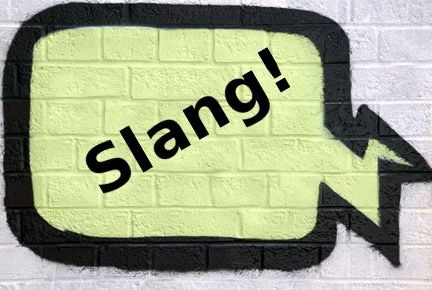
Students in both programs have the opportunity to learn slang in “Street Talk,” an elective class that focuses on current American slang and idioms. Chinese student Jiu Hua Zhang said that English instruction in China is very formal compared to what she’s learning at UCLA. “Here, you can feel what they are feeling,” she said. “Words are not just words.”
Quipped “Street Talk” instructor Gene Kavenoki, “If standard language instruction is the meat and potatoes of English acquisition, this slang class is the banana cream pie.”
Kavenoki puts particular emphasis in his class on terms that are germane to Los Angeles — words like “sigalert,” “road rage,” “WeHo,” “trophy wife,” “sugar daddy,” “Seedy Valley,” “metrosexual,” “behind the orange curtain,” “hipster,” “June gloom” and “actress-model-whatever.”
“Given that it’s the trend-setting, pop culture capital of America,” said Kavenoki, “and given its own dynamic, local vernacular, L.A. is in many ways ground zero for slang.”
One source Kavenoki uses to keep current with ever-evolving slang is the Oxford English Dictionary, which adds new terms on a regular basis. Within it you can find “twerk,” “selfie,” “jorts,” “geek chic” and “flashmob.” He also gets ideas from song lyrics, movies, TV shows, pop culture websites such as TMZ and friends in the entertainment industry, whose unique version of English includes terms like “jelly,” “perf,” “addy,” “vom,” “apols,” “vaycay,” “staycay” and “cray-cray.” “This is as authentic a source of class material as there is,” Kavenoki said.
ALC students are eager to learn about American culture, said instructor Adam Rado, who coordinates the Intensive English Communication Program. “They would not have come here if they didn’t admire Western culture,” he said.
Student Reema Aldahlawi, 18, grew up in Saudi Arabia watching the Disney Channel. She picked up conversational English from TV shows such as “Friends” and “Hannah Montana.” “‘Friends’ helped me a lot,” Aldahlawi said. “But I want to learn more.”
Aldahlawi and her “Street Talk” peers also learn about slang in other ALC classes that take an eclectic approach to language instruction that includes everything from pop culture discussions to a look at America through television. Social media are also a great tool for connecting with the latest slang, noted Zhang, who said she’s pleased to have access here to outlets like Twitter and YouTube, which are restricted in China.
Dai Jung Chung, a 28-year-old student from Taiwan, has come up with an additional approach to learning English. “I talk to people randomly — people who look bored,” said Chung, who can often be found in local coffee shops striking up conversations with strangers that sometimes require a basic understanding of slang.
ALC students, who take most of their classes at UCLA Extension’s Lindbrook Center in Westwood Village, get another taste of street language through the “Campus Explorer” course. They meet English-speaking students, sit in on regular classes and report back to their UCLA Extension instructors on any idioms they did not understand.
As part of Kavenoki’s “Street Slang” requirements, students submit a journal listing terms that they encounter outside of class. He also does a class trip to Venice Beach to interface with the locals using colloquial English. “It’s always a student favorite,” he said.
When it comes to slang, said Kavenoki, the learning process goes both ways. He has become a big fan of Chinese idioms, which he said seem to reference animals more than other languages do. Among his favorites: “Killing the chicken to scare the monkey" and “Why use a butcher's knife to kill a chicken?”
Learn more about the American Language Center at the website.