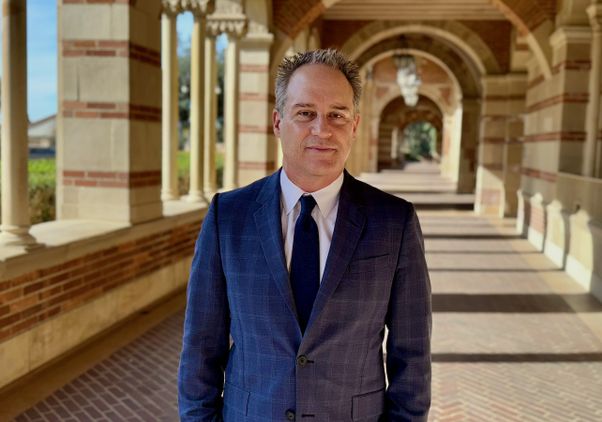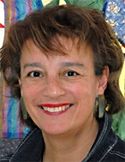
 Patricia Turner is dean and vice provost for undergraduate education at UCLA. She teaches about African American culture and is the author of four books on the subject. This op-ed appeared Saturday, Aug. 03 in the Sacramento Bee.
Sunday is Barack Obama's birthday.
The 44th president came of age during a progressive era marked by sweeping change in the real and perceived status of blacks. Born almost two years before the March on Washington, the intellectually gifted young man apparently suffered no snubs for escorting a white classmate to the prom, thrived on elite high school and university campuses, and settled his family in a tony upscale neighborhood.
Twice he has been elected president of the United States, the second time with opponents able to point to less-than-promised action on the economy, health care and national security, to name just a few of the thorny issues that provoke widely disparate opinions.
The fact that the half Kansan-half Kenyan can blow out his 52 candles at 1600 Pennsylvania Avenue is proof that an American majority comprising multiple ethnicities can see and support a black man as commander-in-chief.
The president exemplifies a fast-track mobility unimaginable one generation earlier and difficult to replicate in the current fiscal environment. Yet his most virulent critics staked their antipathy toward him on their conviction that he lacked the basic biographic prerequisites to be president.
Birthers refused to accept evidence that Obama was entitled to pursue the Oval Office.
Throughout his presidency the racially charged matters that have surfaced persistently reflect distorted notions of where blacks do and don't belong, or how long it should take them to achieve equality.
On his first birthday as president, Obama was confronted with backlash that resulted when an interaction between Henry Louis "Skip" Gates, a celebrated black intellectual and Harvard faculty member, and a white police officer assigned to his neighborhood, made international news.
More recently George Zimmerman's assumption that Trayvon Martin was out of place had a disastrous outcome for Martin, 17, his family and the many supporters who embraced this case.
Supreme Court decisions about affirmative action and voting rights stake positions on the extent to which interventions are needed to enable continued black mobility. But internal and external forces impeded black progress.
The fiscal downturn of recent years has been particularly hard on many African American families. Even though many black Americans have financial and educational circumstances superior to those of their parents, there remain rural and urban communities where the standard of living of this generation of black Americans differs little from that of grandparents who had far fewer opportunities. A strong case can be made that some blacks prolong their impoverished circumstances because they are unable to see themselves and their peers as capable of being productive community members.
But anyone who thinks that all of the work on racial disparities was completed with Obama's election needs to peruse the readers' comments section following a news story on him or the first lady on any topic from immigration to vacations. These comments reflect a strain of bigotry and racism that hamstrings those unfortunate African Americans who encounter these zealots. Old-school white supremacism rears its head far too often.
And the inventory of issues the public expects the president to attend to includes numerous other serious domestic and international flashpoints. Although he campaigned for it, this president has a daunting to-do list.
Perhaps for his birthday present those of us — the voters of multiple ethnicities who supported his elections, those who want to continue to dismantle the legacy of Jim Crow and protect and advance achievements of the civil rights generation — ought to give the president tangible and tenacious support. The kind that requires us to do more than post our indignation on social media websites.
Some of us can get cracking on voter registration drives and get people to polls on all election days, not just in November.
How to enable our employers to do some hiring or, if we are in a position to do so, can we offer up any job training or occupational opportunities?
Some of us ought to be running for school boards or strategizing about how to undo laws that are counterproductive to justice. A 21st century Lyndon Baines Johnson would know how to mobilize against stand-your-ground legislation.
If Obama is the only politician we've ever made a financial contribution to, that has to change. And even though numerous religious and secular groups have tried to combat the forces that engender violence in our most fragile communities, we're certainly not going to get that one right by passing it off to someone else to solve.
Electing Barack Obama president required from us investments of our time, money and energy. With all of the intellectual, financial, spiritual and cultural capital we can muster, we belong in the venues where we can fuel the changes we've waited for others to enact. That's where we belong.