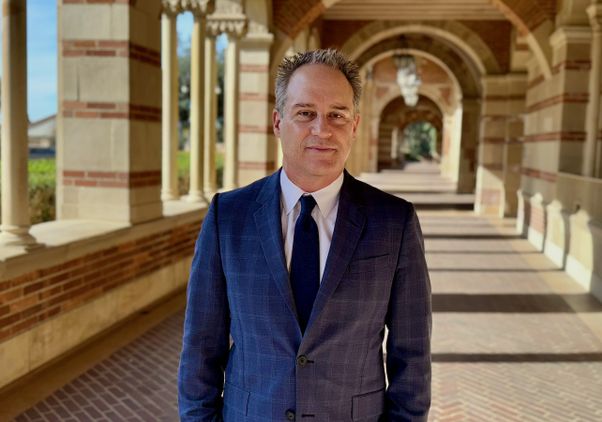
 Gary Rhodes is director of the Center for Global Education at UCLA. He has co-written a chapter in a recently published book, “Olympism, Olympic Education, and Learning Legacies” (Newcastle upon Tyne: Cambridge Scholars Publishing. 2014). In it, Rhodes and Jessica Zlotnicki of WorldTeach Columbia maintain that high-profile sports events like the Olympics provide an opportunity to teach, create and promote more peaceful relationships among nations during and after the Games.
According to the International Olympic Committee in 2013: “Blending sport with culture and education, Olympism seeks to create a way of life based on the joy of effort, the educational value of good example, social responsibility and respect for universal fundamental ethical principles…(placing) sport at the service of the harmonious development of humankind, with a view to promoting a peaceful society concerned with the preservation of human dignity… practicing sport without discrimination of any kind and in the Olympic spirit, which requires mutual understanding with a spirit of friendship, solidarity, and fair play.”
But those goals aren’t always being reflected in what TV audiences have been seeing ever since the opening ceremonies in Sochi.
The U.S. media coverage of the 2014 Winter Olympics began with a focus on concerns about terrorism and potential discrimination and questions about whether the weather would be too warm in Sochi and whether the Russian Federation had spent too much in investing $50 billion to host the Games.
There were more stories focused on the potential of athletes to medal. And viewers saw a plethora of inspiring human-interest stories about the personal challenges of individual athletes, including Canadian skier Alex Bilodeau and his dedication to his brother with special needs. There were features about whether some uniforms or sleds might help speed skaters and bobsledders go faster.
But, in reflecting back on the goals of the Olympic movement, there are other vital dimensions of the Games that are missing from the picture that audiences are getting in the U.S.
We are focusing on events in a city and country outside the U.S. Yet, are viewers getting a better understanding of that region of the Russian Federation? There are athletes from almost 100 countries in the Olympic Village. What can we learn about the world outside the U.S. from stories about Olympic athletes from other countries? What is different about the interactions of Olympic athletes that could provide insights about building a more peaceful and better world?
Rather than taking the easy road of focusing on the U.S. vs. Russia rivalry from the days of the Cold War, how about looking closer at some of the positive relationships between hockey players from different parts of the world, athletes who play together in the NHL? How does that translate during the Olympics to differences between the competition for medals and the potential for youth development and international understanding?
It’s great to root for your country and team, but it’s also great to understand more about other countries, connections between athletes and the connection to youth development through sport.
I would like to challenge NBC, as the Winter Olympics in Sochi winds down, to think about the potential of using coverage to engage TV watchers to go deeper than medal wins and stories about athletes’ personal struggles. I would like the network to think about how they can engage spectators and people outside the U.S. who are involved in the competition so that we can gain a greater understanding of our world.
Prior to coming to UCLA, I worked in the study abroad office at another university. One of the students who went to Italy to study happened to be the daughter of one of the NBC broadcasters covering the Olympics in Sochi.
I would challenge that reporter to think about the positive impact that experience had for his daughter. And I would like him to take the opportunity to have viewers think about the potential for international learning during the Olympics, and the value of travel and study abroad for young people.
There are stories to be told that might commend the athletes, coaches, and the IOC and USOC on issues of international understanding and international relations. How has the Sochi 2014 Winter Olympics embodied the goals of the Olympic movement?
And to the reporter whose daughter studied abroad in Italy: When you look back to your daughter’s study abroad experience, I hope you can remember that it wasn’t just about grades. The focus was also on international learning and understanding experienced outside the classroom. More could be done by focusing beyond gold, silver and bronze in Sochi.
In the same way, the Olympic Games is not just about medals. Tell the viewing audience about these other aspects. NBC has the opportunity to provide stories that make a difference.
____________________________________________________________________
The Center for Global Education at UCLA has developed an online resource to provide additional background on the Olympic ideals and highlights some of the ways that athletes make a difference once the competition ends. See it at www.worldwiseathlete.com.