The University of California wants you: That is the message thousands of high school students will hear in the coming weeks as senior leaders from all 10 campuses visit schools in low-income communities around the state.
The event, called Achieve UC, will reach more than 10,000 students in schools with lower than average college-going rates. The aim: inspire young people to see themselves as college material — and back it up with practical support to help them realize those ambitions.

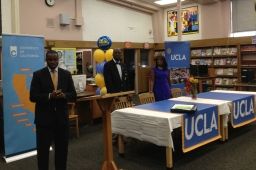
UCLA representatives answered students' questions at Crenshaw High School last year, the first for the Achieve UC initiative.
Students and their parents will have an opportunity to hear about the importance of a college education, the relationship between high school performance and college acceptance, and setting up a college planning checklist. And they’ll be able to ask UCLA representatives about a variety of topics, ranging from the availability of financial aid to student clubs on campus.
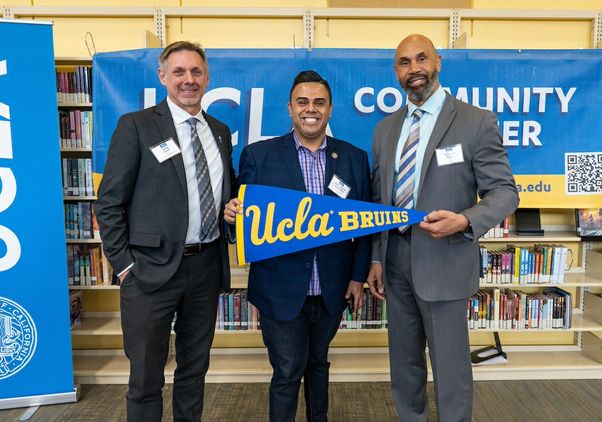
UCLA senior leaders scheduled to speak to roughly 100 9th and 10th graders at the event include Janina Montero, vice chancellor for Student Affairs; Youlonda Copeland-Morgan, associate vice chancellor for enrollment management and a first-generation college student; and Ronald Johnson, UCLA’s director of financial aid. Also participating from the City of Los Angeles will be Daniel Osztreicher, education and health deputy for Council District 11, which includes Westchester.
Advisers from UCLA will also hold sessions for 11th and 12 grade students on requirements for UC admissions, becoming a competitive applicant, the college entrance exams and the UC application process. In addition, a college resource fair will take place at Westchester where staffers from the UCLA Early Academic Outreach Program, the UCLA Financial Aid Office, Bruin Resource Center and other campus organizations will be able to talk to students and parents personally and answer their questions.
Equipping students for success
Almost half of UC students come from low-income families or are among the first generation in their families to go to college, a rate that far exceeds other top-tier research universities.
Yet students in historically underserved communities often don't realize they can afford or get into a four-year college, especially a highly selective university like UC, according to Yvette Gullatt, UC assistant vice provost of education partnerships.
"We want students to know that it's not where you go to high school or where you come from that determines whether you go to UC — it's the wealth of your ambitions and achievements," said UC systemwide Provost Aimée Dorr. "If you've got the courage to aspire and the determination to do well in school, we want you here at a UC campus, and we've got resources to help you and your family manage the cost."
The systemwide effort to connect high school students with UC senior leaders is now in its second year. Last year, UCLA representatives met with more than 100 students and parents from Crenshaw High School.
Since the program was launched, UC has seen an increase in the number of overall number of applications from students at the schools visited as part of last year's effort.
Students at the high schools being visited this year would likely be happy to learn just how high the acceptance rates were among their classmates who applied to a UC last year: More than half were admitted. And that's just the average admission rate.
In addition to the inspiring messages from UCLA Vice Chancellor Janina Montero and other senior leaders, Achieve UC also will provide students and their families with workshops and resources to aid in the college-going process.
Students will meet with advisers who can help them assess what additional classes they need to be college eligible. They will learn about scholarships designed to make college affordable to all Californians — opportunities such as the Blue and Gold Opportunity Plan, which covers the full cost of tuition for students whose families earn $80,000 a year or less.
More than half of California resident undergraduates pay no tuition at all, thanks to the Blue and Gold Plan and other financial aid.
Students at some schools will receive personalized transcripts evaluations that highlight the specific courses they need for admission to California's public four-year colleges. They also will learn about paths for transferring to UC and CSU from community college, should they chose that route.
"It's exciting to see students learn that something they thought was beyond their grasp is actually quite attainable," Gullatt said. "These kids learn that they're just one or two classes away from being UC- and CSU-eligible, and about the financial aid opportunities that are available, and you see their whole vision for their future change."