Three UCLA School of Law professors, Devon Carbado, coauthor of "Acting White: Rethinking Race in Post-Racial America," Kimberle Williams Crenshaw, executive director of the African American Policy Forum, and Cheryl Harris, co-director of the Critical Race Studies Program, have cowritten an article about how recent Supreme Court decisions have run roughshod over the rights of African-Americans. This op-ed appeared July 8 in The Nation.
The recent Supreme Court decisions striking down the federal Defense of Marriage Act and reaffirming the California Supreme Court’s rejection of the challenge to Proposition 8, the state ban on gay marriage, mark a major moment in United States civil rights history. No longer can the federal government discriminate against legally married gays and lesbians, and same-sex couples may now legally marry in California. That we have come this far should be cause for celebration. And yet, we cannot.

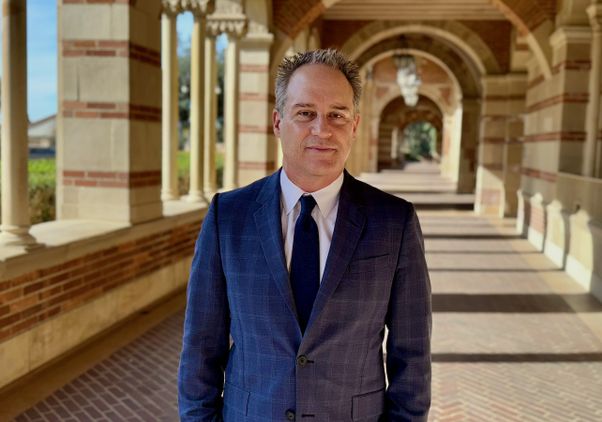
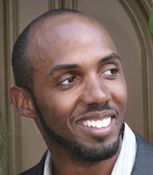
Devon Carbado
Yet notwithstanding this aggressive assault on civil rights, there was very little public outcry. This muted response cannot be attributed to any confusion about the inevitable consequences of this devastating loss. Indeed, in the immediate wake of the decision, various Republican politicians have quickly and unapologetically moved to install highly restrictive and unnecessary voter identification laws previously blocked by the VRA, knowing full well the negative impact those laws will have on people of color and poor people.

Kimberle Williams Crenshaw
We can’t celebrate because Fisher is consistent with the approach the Roberts Court has taken in employment discrimination cases, placing the heaviest burdens on those who seek to prove employment discrimination in the workplace. In Ricci v. Destefano, for example, the New Haven firefighters case, the Court effectively framed efforts to minimize disparate impact discrimination against minorities as intentional discrimination against whites. The Court held that the City’s efforts to avoid the racially exclusionary effects of its promotional test by cancelling the test results for everyone and looking for a less discriminatory metric was itself a form of intentional race based discrimination against whites. Ricci is one of many examples of conservative racial politics dressed up as race-neutral, colorblind constitutional jurisprudence.
We can’t celebrate because the Court continues to frame racial remediation efforts no matter what the context—in education, in employment, in voting—as racial preferences or reverse discrimination. What is even more distressing is that many liberals and progressives frame racial remediation in this way as well. For example, the standard liberal defense of affirmative action is that the policies are racial preferences that are necessary to ensure diversity rather than fair measures designed to offset race specific burdens and biases embedded in the admissions process. This framing of affirmative action is precisely what Justice Scalia traded on when he cast the stigma of preferential treatment around the fundamental right of non-discrimination in voting, referring to the Voting Rights Act as a “racial entitlement.”

Cheryl Harris
We can’t celebrate because our president, our leaders and our advisers insist that we must avoid what is perceived to be racial grievance and frame our civil rights claims through a discourse of non-racialism; we cannot celebrate because we know what gay rights advocates clearly understood: that an inequality that can’t be named cannot be addressed.
We cannot celebrate because African-Americans cannot benefit from the kind of empathy that played at least a partial role in generating public support for marriage equality. The LGBT movement has often pitched its appeals in language that invited “persuadables” to relate to marriage equality through the lives of a loved relative, trusted colleague or dear friend who just happens to be gay. We who have been America’s Others will not gain traction through such appeals because our difference defines not only who we are in the eyes of fellow Americans, but also defines who other Americans imagine themselves to be.
While we join in acknowledging with respect the work and sacrifice that went into achieving these two major Supreme Court wins for the LGBT community, we do so with the sobriety that comes from recognizing the Court’s decisions for what they are—a vision of equality that appears to create winners and losers but in the end shortchanges everyone. Formal equality—the idea that we all just want to be treated the same—was never the only objective of the civil rights movement, the women’s movement nor any social movement. The African-American freedom struggle was not over when the Supreme Court decided Brown, nor when the Civil Rights Act or the Voting Rights Act were passed. The women’s movement was not over when women got the right to vote, or when they were no longer excluded from military combat. Immigrants’ rights will not be secured only by the bill before Congress. And the right to marry will not resolve the ongoing patterns of discrimination against LGBT people. We cannot celebrate because we recognize that despite the myriad constraints imposed by those who stand against human rights in all its various dimensions, we should not accept the current terrain as the map of our possibilities. What we can do is celebrate the clarity that comes from speaking the truth about where things are—a truth that must be reckoned with as a necessary if insufficient precondition towards realizing our freedom dreams. All of us or none.