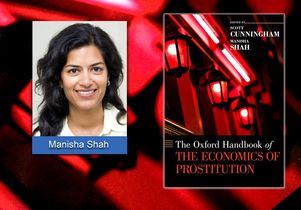
Although prostitution has been studied by various social scientists, the “world’s oldest profession” has received less attention from economists. But that’s changing.
A new toolkit created by the UCLA Luskin Center for Innovation is designed to help communities navigate paths to improving the areas immediately around the river.
Partners not earning much money are likely to struggle because they face challenges outside of their marriage, not communication within their marriage.
Law professor Jill Horwitz discusses the high rate of opioid addiction, and analyzes the ineffective state laws that have tried to curb the pervasive disease.
UCLA and Inter-American Development Bank study finds progress toward universal health coverage, but persistent gaps in how citizens assess the quality and effectiveness of primary care.
Dr. Bartly Mondino of the Jules Stein Eye Institute writes that a proposal in the state legislature to permit optometrists to perform eye surgeries risks far too much harm.
UCLA’s Dr. Jonathan Fielding chaired panel whose report called for increased coordination both within the Department of Health and Human Services and across federal agencies.
As Americans struggle with obesity and diabetes, UC researchers say that new nutrition labels could help consumers change their shopping choices and ultimately their diets.
The L.A. Energy Atlas project, a first-of-its-kind interactive website, enables policymakers and the public to sort energy consumption and emissions by building size, neighborhood and other metrics.
Mary Nichols, chair of the California Air Resources Board and a UCLA faculty member, is a fierce fighter for the environment. She has championed a difficult cause without succumbing to bitterness or wallowing in the polarization that has crippled Sacramento and Washington.
Law professor Adam Winkler writes that it’s time for Congress to pass a law that safeguards due process and forbids suspected terrorists from purchasing firearms.
The government’s use of land regulations and zoning laws has acted as a de facto form of segregation that keeps lower-income people from moving into more affluent areas.
A report from the UCLA Center for Health Policy Research contains key recommendations to overcome the critical gaps in understanding how the law, which takes effect June 9, will work.
Jon Christensen asserts that in analyzing the results of Proposition 84, which allocated more than $5 billion to parks and environmental resources, it’s clear that benefits come when priorities are clearly defined.
Social work professor Mark Kaplan found that an increase in high-risk drinking during the Great Recession may explain the rise in alcohol-related suicides by men — but not women.
U.S. Deputy Secretary of Energy Elizabeth Sherwood-Randall met Tuesday with stakeholders from across the energy ecosystem at UCLA’s Kerckhoff Hall to discuss how Los Angeles can meet its energy goals.
Law professor Noah Zatz argues that the sentencing concept of “working off debt” violates the 13th Amendment's prohibition against involuntary servitude and disproportionately punishes communities of color.
Jim Newton on how the well-intentioned California Environmental Quality Review Act can be misused, stifling economic development and, ironically enough, harming the environment.