From poultry to pies and sugar to soil, UC scientists are uncovering insights across the food spectrum that can make your holidays healthier, happier and more mindful.
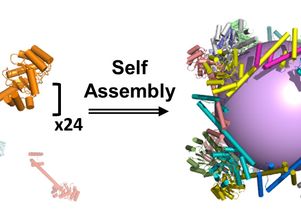
The scientists created the largest protein ever that self-assembles into a molecular “cage.” The protein is hundreds of times smaller than a human cell.
Plants worldwide are more sensitive to drought than many scientists realized. The research may improve predictions of which plant species will survive climate change.
In a day-long event, renowned scientists will highlight and celebrate the monumental contributions of Wallace, at one time the most famous scientist in the world.
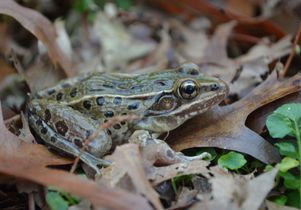
A UCLA scientist was part of a team of that resolved an 80-year-old mystery about whether frogs in and around New York City were, in fact, their own unique species.
Utpal Banerjee, the Irving and Jean Stone Professor and chair of UCLA’s Department of Molecular, Cell and Developmental Biology in the UCLA College, will look at the important role of the fruit fly in helping scientists answer core questions about developmental biology.
Research by UCLA biochemists may lead to a new treatment — or even a cure — for a rare kidney disease that afflicts children, and may provide insights into treatments for Parkinson’s, Alzheimer’s and other degenerative diseases.
Thomas Smith of the Institute of the Environment and Sustainability says the next great extinction could be upon us, but humans can help threatened species survive.
UCLA professor Tom Smith says human-driven evolution is creating drug-resistant diseases, pesticide-proof bugs and mass extinctions due to climate change. "We can either choose to manage evolutionary processes or not, but evolutionary change will proceed regardless."
Drug-resistant diseases, pesticide-resistant bugs and animals threatened by climate change are signs of human-driven evolution getting out of control. A multi-university team calls for solutions.
Buffets of highly processed foods like sugar and flour are as tempting to rats as they are to humans and eating lots of this food weakens cues to stop eating when full.
Researchers identified a gene called AMPK that can slow the aging process throughout the entire body when switched on in key organ systems. Activating the gene in fruit flies extended the animals’ lifespans by about 30 percent.
Black truffles are highly prized in haute cuisine. A study by an international team of scientists sheds new light on their unique pattern of DNA methylation, a biochemical process.
The findings open the door to future research on how to control the regeneration of heart tissue in order to repair damage caused by disease or heart attack.
The funding from the California Institute of Regenerative Medicine will support Dr. John Chute's research aimed at creating new stem cell therapies for use in medical practice.
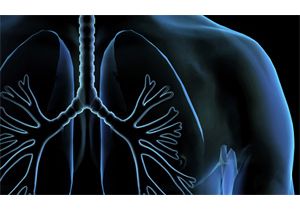
In clinical trials at UCLA, doctors are seeing major treatment successes with an experimental drug called MK-3475 in two types of cancer with historically low survival rates: metastatic melanoma and lung cancer.
The public is invited to join world-renowned culinary visionaries at UCLA's popular "Scientific Bake-off," part of life scientist Amy Rowat's "Science and Food" course.
UCLA researchers have discovered that the parasite that causes trichomoniasis, a common sexual infection, may enhance prostate cells' progression from normal cells to tumor cells.
Those patients with additional major medical conditions are more likely to die from something other than cancer, so radiation or surgery represent "a poor gamble," UCLA researchers say.
"It's like your car's airbag, which won’t be deployed unless you really need it," UCLA's Alexander Hoffman said of the specialized immune cells, which use a built-in feedback system to determine which threats are real and which aren't.