The Laboratory for Environmental Narrative Strategies, or LENS, aims to spur new thinking about the role of multimedia storytelling to drive sustainability.
In ‘Imagining Extinction,’ English professor Ursula Heise asks why people care about endangered species, why some animals become symbols and what that reveals about us.
This professor of art history and Chicana/o studies received the 2016 Gold Shield Faculty Prize, given by the Gold Shield Alumnae of UCLA to a mid-career faculty member with outstanding accomplishments.
UCLA professor Zrinka Stahuljak spent three years translating, annotating, traveling and even co-creating a podcast-inspired blog to showcase “The Romance of Gillion de Trazegnies.”
Thanks to a major grant from The Ahmanson Foundation, scholars and students will have access to digital copies of some 1,100 rare and unique Syriac and Arabic manuscripts.
UCLA art history students and local fine arts photography lovers have a rare opportunity to view the life’s work of influential American photographer Robert Frank, known as the inventor of street photography.
UCLA Library Special Collections posted online a rare interview the famously reclusive author of the classic “To Kill a Mockingbird” gave to WQXR radio host Roy Newquist in 1964.
Professor Malina Stefanovska says that the infamous seducer wasn’t merely after conquest; he chased intelligent conversation and passionate affairs to remember.
The original manuscripts of his memoirs reveal a life that went beyond his notorious reputation and academics will discuss that at a conference hosted by UCLA’s Center for 17th and 18th Century Studies.
Funds will support the Excellence in Pedagogy and Innovative Classrooms project, or EPIC, which will examine students’ changing learning styles and train faculty and graduate students in effective teaching methods.
English professor Matthew Fisher writes about the history of reproducing manuscripts and what has been lost as duplication and widespread dissemination became easier.
History professor Nile Green writes about a group of young Iranian students and their amazing experiences of shared learning and fellowship with their hosts in early 1800s London.
With help from faculty and students at UCLA and Waseda University in Tokyo, UCLA professor Michael Emmerich has developed and launched an app to teach students to read premodern calligraphy used in classical Japanese texts.
Starting next fall non-English majors will for the first time be able to enroll in a creative writing course. It will be taught by professor and acclaimed novelist Mona Simpson, and newly hired head of creative writing, Fred D’Aguiar.
For the last 18 years, UCLA’s Lisa Snyder has been bringing to life the bygone glory of a true architectural, social and cultural wonder — the Chicago World’s Fair.
Professor Melvin Rogers writes in the Atlantic that Ta-Nehisi Coates’ bestselling new book about racism and African American identity fails to recognize the importance of hope.
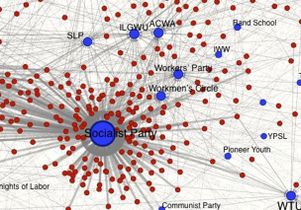
Tobias Higbie is a UCLA scholar of labor history who is using digitized historical records to gain new perspectives about labor and social movements of past eras.
UCLA faculty, staff and students, with guidance from a Santa Monica architect, are building a prototype dwelling that they designed to shelter people as well as edible plants, bees, birds, lizards and even bats.
In his recently released book, UCLA English professor Joseph Bristow delves into Oscar Wilde’s obsession with obscure poet Thomas Chatterton, whom many scholars have long assumed Wilde plagiarized.