During the Winston C. Doby lecture, the co-founder of the United Farms Workers outlined a history of civil rights and encouraged the audience to keep fighting for justice.
UCLA hosted California Assembly Speaker Anthony Rendon’s lecture series featuring three artists talking about how their work responds to and shapes their worlds.
In UCLA’s 124th Faculty Research Lecture historian Ellen DuBois will share details of the story, which remains as vital today as it when it was happening.
Economics professor Adriana Lleras-Muney writes about how a welfare experiment from 100 years ago offers a dramatic lesson in what really helps poor children.
The UCLA Chicano Studies Research Center is home to the publication’s archives, selections of which are on display at the Autry Museum as part of Pacific Standard Time: LA/LA.
UCLA Library scholars worked with partners at St. Catherine’s Monastery and the Early Manuscripts Electronic Library on the five-year Sinai Palimpsests Project.
Zev Yaroslavsky writes that the large studio complex at the corner of Fairfax and Beverly should be designated a historic site to preserve part of the L.A. history.
Every year students say the highlight of history professor Teo Ruiz’s class is the all-day bus and walking tour of the city that’s so close, yet so far.
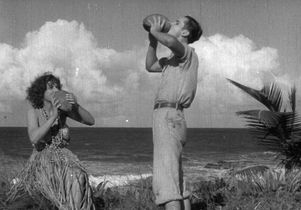
“Romance Tropical” to premiere Nov. 4 as part of a UCLA Film and Television Archive exhibition, which celebrates the Spanish-language film culture of downtown Los Angeles.
Renee Tajima-Peña’s award-winning documentary “No Más Bebés” tells the story of how these women were sterilized without their consent or under extreme duress from doctors.
Since its founding, the Institute for Research on Labor and Employment has produced analytical research to shape public policy and public opinion on labor issues.
UCLA history professor Joan Waugh, one of the nation's preeminent scholars on the Civil War, shares how the historic era and the Confederacy touched the state.
On International Day of the World’s Indigenous Peoples, Ulia Gosart takes stock of how far indigenous people have come on the world stage and how far they have to go.
Scholars are and tribe members are developing educational resources that shed light on this vital part of California’s indigenous history and also on its future.
“How to Make the Universe Right” presents a stunning installation of painted religious scrolls, ceremonial clothing, and ritual objects of the Yao, Tày, Sán Dìu, Sán Chay among others.
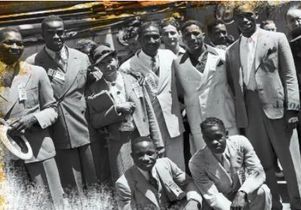
UCLA digital humanities students built a website and database that sparked a curator to develop “Center Stage: African American Women in Silent Race Films.”