The money will fund a new collaboration among primary care clinics, community-based organizations and educational institutions throughout Riverside County.
Patients of UCLA’s kidney transplant program — already the best of the nation’s largest programs in terms of survival rates — will find comfort and convenience in a state-of-the-art new home thanks to the generosity of philanthropist Connie Frank.
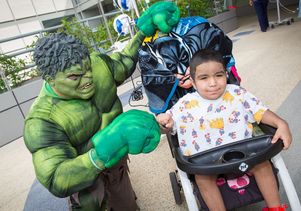
Window washers dressed as Batman, Captain America, Spider-Man, the Hulk and Wonder Woman entertained and posed for photos with young patients and their families at the third annual Superhero Day at Mattel Children's Hospital UCLA.
Children and adolescents who receive integrated mental health and medical treatment are 66 percent more likely to have a good outcome than those who receive more traditional primary care.
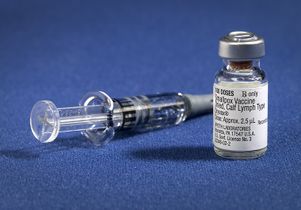
Dr. Nina Shapiro writes in the Wall Street Journal that a new law in California permitting exemptions for vaccines only with a doctor's order is a good first step, but more needs to be done to ensure vaccination compliance.
Exploring the brave new world of microbiota may one day lead to the development of better ways to manage infections, create new antibiotics and address obesity, heart disease and cancer.
UCLA researchers found that a subset of ovarian cancer cells that don’t produce the CA125 protein biomarker, used to test for ovarian cancer, have an enhanced ability to repair their DNA and resist programmed cell death.
New research highlights the value of a program at UCLA's Semel Institute that teaches social skills to high-functioning young adults with autism spectrum disorder.
Teens who have a positive role model, an adult mentor at school, and who volunteer or participate in extracurricular clubs are less likely to be overweight.
Public health professor Roshan Bastani, director of UCLA’s Kaiser Permanente Center for Health Equity, joined a panel of health experts at a Zócalo event to discuss how to help low-income families stay healthy.
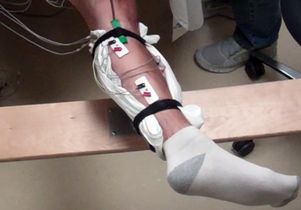
Five men who have been completely paralyzed for years moved their legs in a rhythmic motion, thanks to a noninvasive method of stimulating the spinal cord, UCLA scientists report.
The award from the California Institute for Regenerative Medicine will fund a phase I/II clinical trial that will enroll 10 patients with an immunodeficiency disorder at three different U.S. locations.
A UCLA-led study suggests that the Brain Trauma Foundation's guidelines for treating traumatic brain injuries do not guarantee better clinical outcomes for patients.
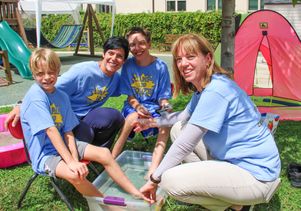
Camp Leg Power combines creative therapeutic activities in a fun camp atmosphere with a pilot study to see if changes in the brain can be identified in children with spastic cerebral palsy.
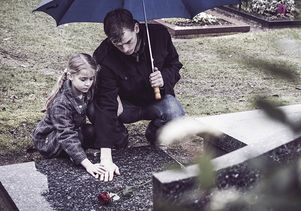
An assessment tool developed jointly by psychiatrists at UCLA and the University of Texas Health Science Center at Houston will be the first to help identify maladaptive grief in youth between 8 and 18.
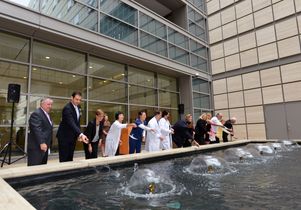
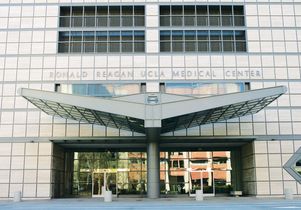
Located in a courtyard next to the Ronald Reagan UCLA Medical Center, a fountain was dedicated to honor those who become organ, eye and tissue donors at the time of their deaths.
A University of California initiative to reduce costs and improve quality across UC’s five academic medical centers has saved more than $70 million in its first year.