More than 100 UCLA Health employees will be staffing two clinics to ensure the health and well-being of spectators, Olympians, their coaches and chaperones.
Researchers at UCLA’s Semel Institute for Neuroscience and Human Behavior and the Fielding School of Public Health are participating in a new study of children with autism spectrum disorders that could help physicians diagnose and track ASD and assess treatments.
With less of the protein, called p53, older epithelial cells have a hard time maintaining the integrity of their genetic material when they encounter carcinogens, which allows cancer to develop.
Dr. Edward Zaragoza, UCLA clinical director of imaging informatics and chief of acute care imaging, practices aerialist acts of derring-do several nights a week at the Cirque School in West Hollywood.
Why do some youngsters bounce back quickly, while others suffer devastating side effects for years? Damage to the fatty sheaths around the brain’s nerve fibers may explain the difference.
The UCLA campus has become a place where mind-body programs are being developed to help people deal with stress as well as maintain a healthy lifestyle through the Healthy Campus Initiative.
Sepsis accounts for roughly the same percentage of hospital readmissions in California as heart attacks and congestive heart failure — and it costs the health care system more than both of them combined.
The researchers tracked the behavior of patients and doctors before and after a 2009 policy change in a county-run health program in Orange County, California.
The UCLA Fielding School of Public Health team, in partnership with public- and private-sector organizations, is spearheading community action to reduce exposure to smoking in Los Angeles apartment buildings.
Scientists from UCLA and City of Hope have become the first to inhibit the mechanism of a protein that regulates a key process that causes cancer to grow.
The findings strongly suggest that stem cell-based gene therapy with a chimeric antigen receptor may be an effective treatment for chronic HIV infection in humans.
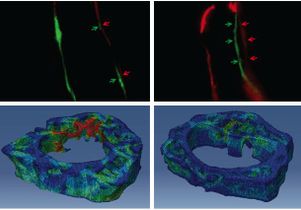
Results could one day have an impact on the development of a treatment for osteoporosis as well as potentially help those with traumatic bone injuries.
The study, published in the journal JAMA Psychiatry, concluded that doctors should consider prescribing the long-lasting injectable much earlier in the course of treatment than they typically do today.
Tens of millions of Americans will suffer at some point in their lifetime from obsessive-compulsive disorder. Functional MRI might help doctors predict who responds best to one of the most common treatments.
“Much of the psychological distress stemming from chronic life stress and trauma remains undetected and untreated,” said Gail Wyatt, a UCLA psychiatry professor.
The three-year project aims to fill critical gaps in knowledge about concussion and translate research findings into new safety guidelines for the more than 450,000 U.S. collegiate student-athletes.