UCLA faculty voice: Neuroscience helps explain American households’ $12 trillion debt May 15, 2015 ...
Stem cell scientists at UCLA develop more effective way to create motor neurons April 21, 2015 New ...
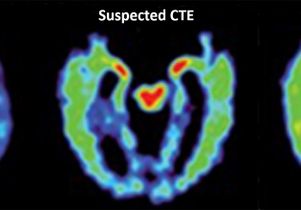
UCLA study finds characteristic pattern of protein deposits in brains of retired NFL players who suffered concussions April 6, 2015 The ...
Electroconvulsive therapy changes key areas of the brain that play roles in memory and emotion April 2, 2015 UCLA ...
UCLA researchers help create ‘gold standard’ method for measuring a key early sign of Alzheimer’s disease March 25, 2015 The ...
UCLA opens new Staglin Family Music Festival Center for Brain and Behavioral Health March 17, 2015 The ...
UCLA study shows that people with anorexia and body dysmorphic disorder have similar brain abnormalities March 6, 2015 People ...
UCLA researchers identify molecular ‘switch’ that causes Huntington’s disease–like symptoms in mice February 12, 2015 ...
Forever young: Meditation might slow the age-related loss of gray matter in the brain, say UCLA researchers February 5, 2015 A new ...
Study identifies biological mechanisms for schizophrenia, bipolar disorder and depression January 28, 2015 Genes ...
UCLA study pinpoints two genes that increase risk for post-traumatic stress disorder January 14, 2015 Why do ...
Exposure to antidepressants during gestation influences anxiety behavior later in life January 13, 2015 UCLA ...
Brain’s reaction to virtual reality should prompt further study, suggests new research by UCLA neuroscientists November 24, 2014 New ...
UCLA study finds link between neural stem cell overgrowth and autism-like behavior in mice October 9, 2014 UCLA ...
Two UCLA scientists receive NIH grants to further BRAIN Initiative research September 30, 2014 Dr. X. ...
UCLA faculty contribute to international study on the biology behind schizophrenia July 21, 2014 The ...