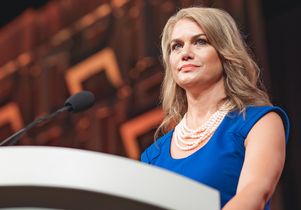
The driving force behind the development of Herceptin will split a $1 million prize from the Royal Swedish Academy of Sciences and the Sjöberg Foundation.
The comedian, actor, director, writer and producer, who died in March 2016, directed funds to benefit research in endocrinology, diabetes and hypertension; infectious diseases; and pancreatic diseases.
Q&A with Melissa Reider-Demer who was honored by the health care organization Press Ganey, which promotes clinical safety, patient experience and workforce engagement.
En 2010 y 2011, 8,943 hombres de 15 a 50 años de edad en Chihuahua fueron asesinados: tres veces el número de muertes entre las tropas de los Estados Unidos en Irak desde 2003 y 2006.
A technique they developed coaxes pluripotent stem cells — which can can be grown indefinitely in the lab — into becoming mature T cells capable of killing tumor cells.
The paper recommends nearly a dozen policy strategies aimed at ensuring adequate staffing and training to serve the growing number of elderly people in the state.
In this Q&A, Paul Boutros explains how scientists take cancer data, including DNA sequencing combined with clinical records, to design personal treatments.
The condition, which affects red blood cells’ ability to produce regulatory T cells, can affect the intestines, pancreas and thyroid, as well as other parts of the body.
The personnel use a screening process for determining whether to “medically clear” patients experiencing psychiatric emergencies. The cleared patients are taken to a special psychiatric emergency service facility.
The research, conducted at the UCLA Alzheimer’s and Dementia Care Program, also shows that the program was cost-neutral after accounting for its costs.
The drug, previously developed to treat depression, was found to increase levels of an enzyme that may delay the onset of Alzheimer’s symptoms and the buildup of a toxic protein.
Dr. David Sabatini, a Massachusetts Institute of Technology biologist and associate director of the Whitehead Institute for Biomedical Research, earned the 2018 Switzer Prize for his research into influences on cell growth.
UCLA’s Dr. Michael Gandal said that beyond the important new findings, he is even more optimistic about what the data will help researchers learn in the future.