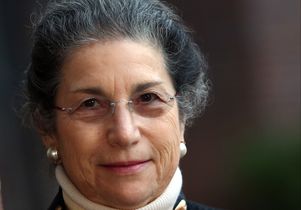
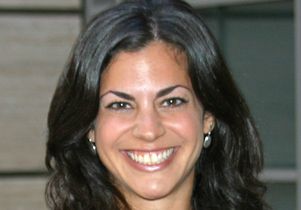
An expert discussion jointly sponsored by UCLA and Zocálo, explored the ethical challenges around death that arise in an age of tremendous advances in medical treatment.
Post-acute care accounts for some $62 billion in annual Medicare spending, but spending varies widely across different parts of the U.S., suggesting that some medical centers may be using these services too often.
The advance could make it much more efficient to build nanoelectronic and nanobioelectronic devices that could measure brain cell and circuit function in real time.
People who become targets of discrimination can suffer effects ranging from low self-esteem to a higher risk for developing stress-related disorders such as anxiety and depression.
Johnese Spisso, a nationally recognized academic health care leader, will oversee all operations of UCLA’s hospitals and clinics as well as the health system’s regional outreach strategy, effective Feb. 8.
Through a systematic review of Alzheimer’s studies, Ron Brookmeyer’s team at UCLA has found that the rate of being diagnosed with the disease doubles every five years in older populations.
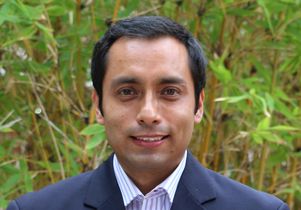
The founding director of UCLA’s Ahmanson-Lovelace Brain Mapping Center is now vice chancellor for UCLA Health Sciences and chief executive officer of UCLA Health. And he’s still in awe of the brain and its complicated choreography.
Dr. Vernon Rosario, an expert on LGBT mental health issues, comments on "The Danish Girl," a movie about one of the first individuals to undergo a sex change.
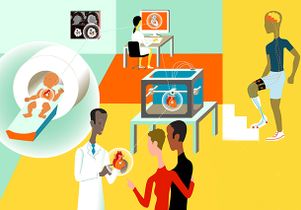
UCLA scientists are working at the forefront of technological advances in an era of personalized health care treatment and research that challenges our imaginations.
Families OverComing Under Stress, or FOCUS, was able to reduce the most problematic psychological and emotional symptoms of men and women in the military, their spouses and their children for half of its participants.
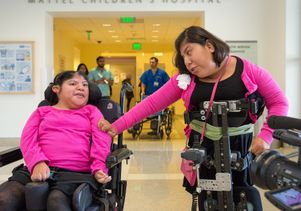
Maria de Jesus and Maria Teresa Alvarez, the formerly conjoined Guatemalan twins who were separated in 2002 in a landmark 23-hour surgery, returned to Mattel Children’s Hospital UCLA to visit sick children.
Of the 47 geographical areas the researchers analyzed, 20 had significantly higher percentages of people with advanced-stage disease than the U.S. norm.