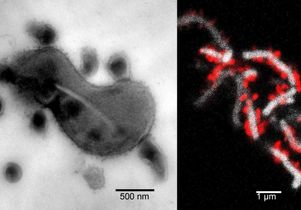
People with a deficiency of the iron-regulating hormone hepcidin are especially vulnerable to Vibrio vulnificus, but research shows a medical form of the hormone can cure the infection.
Off-label prescriptions of medications and medical devices can be beneficial, but without rigorous study it is difficult to know what works and what doesn’t.
UCLA researchers found that although Prozac and Lexapro were thought to work the same way, the medications did not produce the same long-term changes in anxiety behavior.
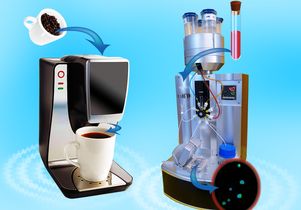
A team led by researchers at the California NanoSystems Institute developed a new method for extracting and analyzing cancer cells circulating in patients’ blood.
People told how much cancer-causing pollution they could prevent were more likely to change their power usage than people told how much money they could save.
UCLA Anderson associate professor Maia Young studies organizational behavior, and some of her research involves your reputation as a leader, as someone who knows how to get things done. If you have a bit of mystique, that enhances people's perception of you.
The year 2014 featured the debut of a multi-year fundraising campaign, research breakthroughs, stunning achievements by students and faculty — and an unexpected flood that impacted the campus for months. We call that a momentous year.
New UCLA brain research offers hope that lost memories can be restored. The study provides evidence that long-term memory is not stored at synapses, as previously thought.
UCLA study shows that combining palbociclib with letrozole effectively doubled the length of time women with estrogen receptor-positive breast cancer were on treatment without their cancer worsening.
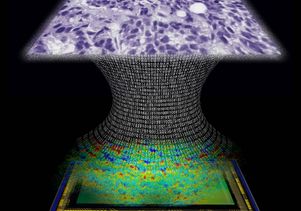
UCLA researchers led by Aydogan Ozcan have developed a lens-free microscope that can be used to detect cancer with the same accuracy as larger and more expensive optical microscopes.
UCLA’s Children's Pain and Comfort Care team at Mattel Children's Hospital works to succor pediatric, adolescent and young-adult patients in their days of need and to help their families grapple with the unfathomable: the death of that young patient.
New UCLA research indicates that use of social media such as Facebook and Twitter along with behavioral psychology can boost HIV testing rates, suggesting a valuable tool in the fight against the virus that causes AIDS.
UCLA’s Edward Garon, the study’s principal investigator, says the drug offers new hope for people with lung cancer who often have few treatment options.
Logan Nobriga, a 10-year-old-boy who is battling cancer, was honored at a Bruins’ basketball game as the first “Kid Captain” selected by Mattel Children’s Hospital UCLA and the UCLA Men’s Basketball team.
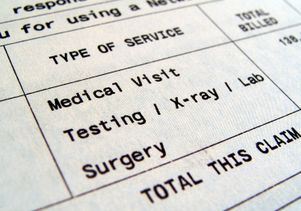
In results characterized as “very surprising,” UCLA researchers found for the first time that higher-earning clinicians make more money by ordering more procedures and services per patient rather than by seeing more patients, which may not be in patients’ best interest.
A new report evaluating research-based programs designed to enhance the mental health and resilience of military families, has found that they help veterans and their families cope with the effects of wartime service.
National guidelines recommend that men in these cases should not be treated with radiation or surgery, since they are unlikely to live long enough to benefit from treatment.
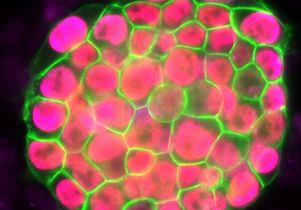
UCLA scientists say this could lead to a better understanding of stem cell signaling and the immune system response, paving the way for new and more effective therapies.