The new guidelines, co-developed by UCLA's Christopher Giza, are aimed at protecting the more than 1 million athletes who suffer concussions each year in the U.S.
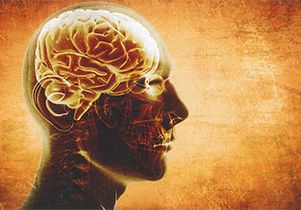
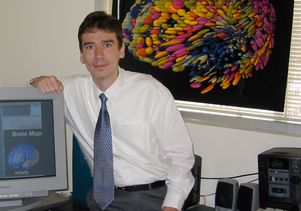
UCLA is well-positioned to play a significant role in a national effort to map the brain, as the home of the Ahmanson Lovelace Brain Mapping Center and more.
"Today, our scientists are mapping the human brain to unlock the answers to Alzheimer’s; developing drugs to regenerate damaged organs; devising new material to make batteries 10 times more powerful. ... Now is the time to reach a level of research ...
UCLA scientists have found that hypocretin, a peptide neurotransmitter, is increased during positive experiences, suggesting it could be useful in potential treatments for depression.
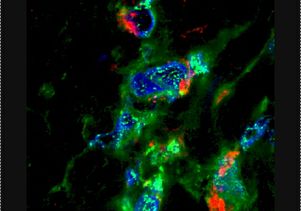
By combining, for the first time, "connectome" brain scans, extensive genomic screening and high-powered computing, scientists quickly zeroed in on a faulty gene.
Overlapping financial, cultural and communication barriers often prevent Latino men with prostate cancer from accessing the care they need, UCLA researchers say.
The encouraging results of Project Access, which involved 48 communities in Africa and Thailand, have "major health benefit implications," said UCLA's Thomas J. Coates.
Those who reported the greatest support also had the smallest increases in a pregnancy-related stress hormone that has been associated with depression after birth.
Long thought to be just genetic "garbage," mutant viruses can tag along with their normal cousins and, in some cases, increase disease transmission by up to 10 percent.
In findings that have implications for L.A.'s recent TB outbreak, researchers show that certain bacteria pretend to be viruses -- a tactic that allows them to hide out inside our cells.
UCLA researchers and colleagues have discovered that acne bacteria contain "bad" strains associated with pimples and "good" strains that may protect the skin.
Public health scholars and policymakers agree it is possible to get people to choose healthier options if they are engaged on several fronts, including enforcement by law. "Policy is not a dirty word," said Los Angeles County Director of Public Health Dr. Jonathan Fielding, a distinguished UCLA professor of health services and pediatrics.
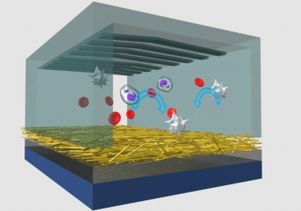
By "grabbing" these cells, doctors can perform a "liquid" biopsy, allowing for earlier detection and better monitoring of cancer progression and treatment.
Unusually high calcium levels in the blood can almost always be traced to primary hyperparathyroidism, an undertreated, underreported condition that affects mainly women and the elderly, according to a new study by UCLA researchers.
By combining a signaling molecule with a polymer, the team created a therapy that mimics the body's natural ability to heal itself and that can be shipped and stored safely.
Depressed seniors not being treated with antidepressants showed a weaker immune response to the shingles virus — and thus were less able to respond to the vaccine.
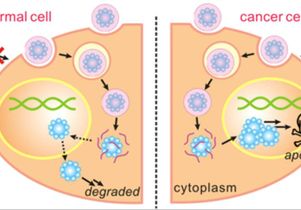
The UCLA-developed polymer capsule delivers cell-destroying material to the nucleus of cancer cells, inducing their death while leaving healthy cells unharmed.
A gene thought to express the so-called heat shock protein αB-Crystallin in all cells that experience stress instead expresses it only in certain cell types, researchers say.
As part of the Human Brain Project, UCLA's Laboratory of Neuro Imaging will help aggregrate the world's data on the brain and reconstruct it in computer-based models.
The initiative, envisioned and supported by Jane and Terry Semel, will integrate health and wellness programs across UCLA to help make healthy living a natural part of campus culture.
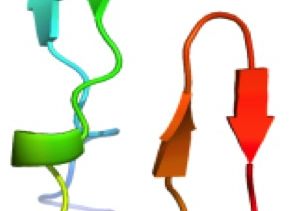
Scientists have now pinpointed a tiny segment of the toxic amyloid-beta protein that they believe facilitates "clumping" and the subsequent death of brain cells.
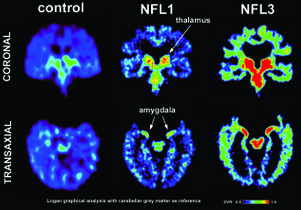
Players' brains were found to have elevated levels of tau protein, a precursor to Alzheimer's and the condition known as CTE, which afflicted the late Junior Seau.