The Synthetic Control Across Length-scales for Advancing Rechargeables center will help accelerate research on new types of chemistry and materials that can help improve batteries’ capacity, stability and safety.
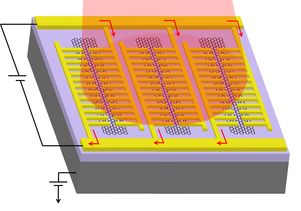
The device, designed by UCLA Engineering researchers, operates across a broad range of light, processes images more quickly and is more sensitive to low levels of light than current models.
The availability of such cells — with properties similar to those from humans and other animals — should help scientists accelerate research on therapies for cancer and autoimmune diseases.
Hosea Nelson and Jose Rodriguez have been selected among 22 early career researchers for the awards which provides funding for work advancing human health.
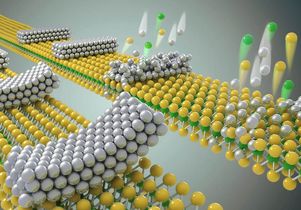
Their method joins a semiconductor layer and a metal electrode layer without the atomic-level defects that typically occur as part of the process commonly used now.
The study is the first to establish a link between susceptibility to seizures and the gut microbiota — the 100 trillion or so bacteria and other microbes that reside in the human body’s intestines.
UCLA’s Sarah T. Roberts spoke with the executive about how the world’s largest social media platform balances free expression with creating a safe community for all.
The research in marine snails could lead to new treatments to restore memories and alter traumatic ones in people with Alzheimer's disease and those dealing with post-traumatic stress disorder.
“Tissues are wonderfully complex structures, so to engineer artificial versions of them that function properly, we have to recreate their complexity,” said UCLA professor Ali Khademhosseini.
Researchers led by UCLA’s Dr. Paul Krebsbach are the first to characterize the mechanism of the gene, and they found it regulates the molecular process that dictates cell growth and human development.
“The center will provide CNSI with the cutting-edge technology to help us maintain our leadership in biophotonics research,” said UCLA’s Laurent Bentolila.
The study, led by Professor Amander Clark, could lead to important advances in an area of medicine that historically has been underfunded and underappreciated.
“Today’s rich biodiversity among marine fish shows the fingerprints of the mass extinction at the end of the Cretaceous period,” said Michael Alfaro, a professor of ecology and evolutionary biology.