While women have made significant gains in many fields, including medicine, business and law, the percentage of women who receive CS degrees is the smallest across all STEM fields, according to the U.S. Department of Education.
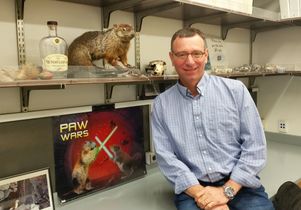
Daniel Blumstein, a professor in the UCLA Department of Ecology and Evolutionary Biology, is the recipient of the 2017 Gold Shield Faculty Prize, presented annually by Gold Shield, Alumnae of UCLA.
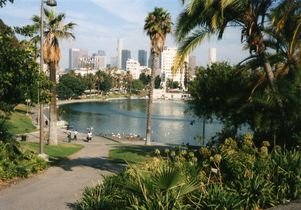
Study showed air, soil and water from city parks in Los Angeles, San Diego, Fresno and Bakersfield contained high quantities of the genes in bacteria cells.
The new technique for breaking carbon–hydrogen bonds and making carbon–carbon bonds uses catalysts made of silicon and boron, which are abundant and inexpensive.
Math often gets a bad rap as an uncreative left brain-oriented activity, but Andrea Bertozzi recalls that, as a child, she was fascinated by math's creative potential.
A biologically friendly supercapacitor invented by UCLA and University of Connecticut researchers charges using electrolytes from biological fluids like blood serum and urine.
Q&A with UCLA professor Sarah Roberts, who has pioneered the study of the toll screening objectionable online content takes on the people who have to do it.
The funds will support the researchers’ efforts to develop a process for capturing carbon dioxide and converting it into a material that can be used in building and construction.
Scientists from UCLA and other universities developed a system that tests when global warming contributes to record-setting weather events, and to what extent.
Sam Emaminejad, assistant professor of electrical engineering at UCLA, has demonstrated that a wearable biosensor can be used in the diagnosis of cystic fibrosis, diabetes and other diseases.
UCLA Ph.D. student Andy Tay writes about a crucial a challenge to long-distance space travel — overcoming the long-term effects of microgravity on our bodies.
Hiroshi Motomura, Michelle Huneven and Aydogan Ozcan were selected for the distinguished prizes that go to scholars, artists and scientists in the United States and Canada.
The donation, which builds on Henry and Susan Samueli’s previous gifts, will fund a program that combines scholarships and internships for as many as 50 first-year students.
UCLA's Congo Basin Institute led a team of UCLA and Cameroonian students into a rain forest in central Africa to reopen a field station in a jungle with a thriving ecosystem with birds, elephants and monkeys.