John Villasenor notes that in the battle between Apple and the U.S. government, the ever-accelerating pace of change in technology makes applying older laws a murky proposition.
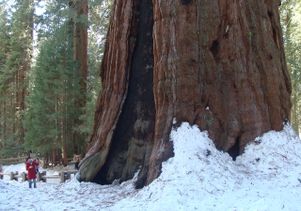
Brad Shaffer, director of the UCLA La Kretz Center for California Conservation Science, says the role of citizen scientists is important in helping scientists track changes in the environment due to climate.
In this Q&A, Jon Christensen of UCLA and his colleague Adam Wolf discuss their study of how climate change affects plant species’ shifting in California.
Discovery provides scientists with critical information on the best way to create stem cells for purposes such as cell transplantation or organ regeneration.
The violent impact with a “planetary embryo” called Theia occurred approximately 100 million years after the Earth formed, UCLA geochemists and colleagues report.
The six UCLA undergraduates are vying for top honors in the inaugural FuturizeX Student Challenge, a competition that aims to inspire the next generation of innovators.
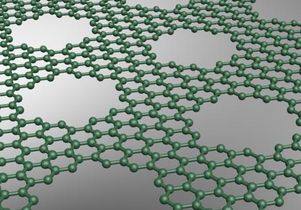
The advance could make it much more efficient to build nanoelectronic and nanobioelectronic devices that could measure brain cell and circuit function in real time.
Terahertz waves can be used to analyze plastics, clothing, semiconductors and works of art without damaging them and to investigate the formation of stars, among other applications.
With help from faculty and students at UCLA and Waseda University in Tokyo, UCLA professor Michael Emmerich has developed and launched an app to teach students to read premodern calligraphy used in classical Japanese texts.
Logic would suggest that millions of years of evolution would have perfected spatial localization in humans. A new UCLA study helps explain why that’s not the case.
The study, by researchers at the California NanoSystems Institute, could be an important step in the effort to satisfy the world’s need for clean water.