Archaeologist Matthew Curtis was part of a team that recently discovered a skeleton that yielded the first complete ancient genome ever found in Africa.
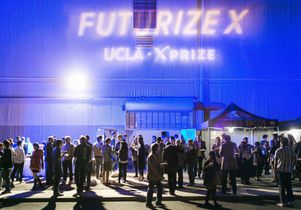
A sold-out crowd at UCLA’s IDEAS campus got a visionary glimpse into the future of space exploration Friday at the first of a series of events hosted by FuturizeX, a campuswide initiative being launched by UCLA and XPRIZE.
For the last 18 years, UCLA’s Lisa Snyder has been bringing to life the bygone glory of a true architectural, social and cultural wonder — the Chicago World’s Fair.
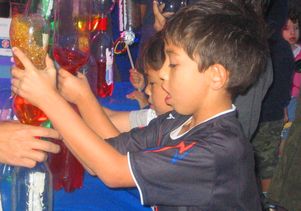
Guests can launch a rocket, take a peek at planets outside our solar system, make a cloud in a bottle and get up close and personal with dinosaur fossils and meteorites.
UCLA research reveals the three-dimensional atomic structure of a double-stranded RNA virus and the biological nano-switch that turns on transcription.
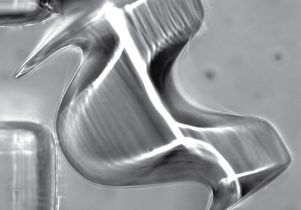
UCLA’s Seulgi Moon and her colleagues devised a mathematical model that estimates the amount of stress bedrock is under, which will enable scientists to predict where fractures may occur.
Life scientists from UCLA and other universities in the U.S. and England argue that predatory animals helped keep the population of large herbivores in check.
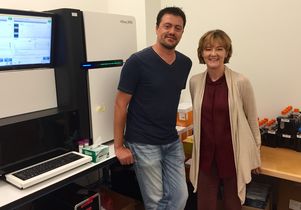
Using Broad Stem Cell Research Center’s cell isolation and genetic sequencing technologies and sophisticated bioinformatics, scientists identify elusive LncRNA genes.
The new cell construction extends the cell’s effective life in air by more than 10 times, with only a marginal loss of efficiency converting sunlight to electricity.
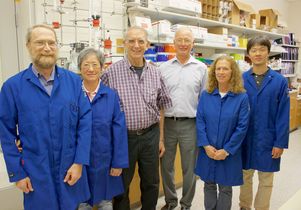
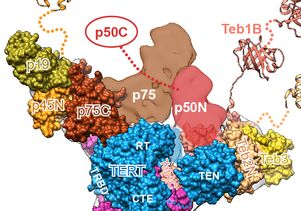
“There is so much potential for treating disease if we understand deeply how telomerase works,” said UCLA professor Juli Feigon, a senior author of the study.
New research indicates that some dinosaurs, at least, had the capacity to elevate their body temperature using heat sources in the environment, such as the sun.
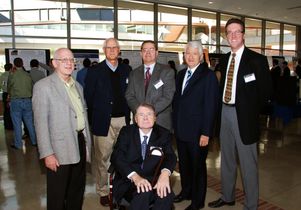
Richard F. Heck, a UCLA alumnus who captured the 2010 Nobel Prize in chemistry, died Friday in Manila after suffering for years from a number of illnesses, including prostate cancer and diabetes. He was 84.
The particles are used in a wide range of consumer products for their ability to kill bacteria. But that benefit might be coming at a cost to the environment.
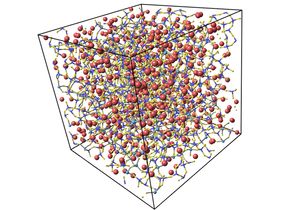
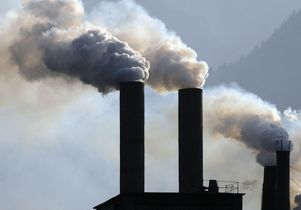
Cement manufacturing accounts for roughly 7 percent of the world’s carbon dioxide emissions, but scientists are determined to lessen its environmental impact.