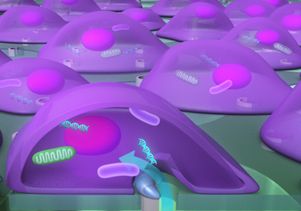
UCLA engineers and doctors developed a tool that can deliver nanoparticles, enzymes, antibodies and bacteria into cells thousands of times faster than current technology.
New compact, reliable energy storage devices outperform batteries by holding larger amounts of energy, recharging more quickly and lasting for longer recharge cycles.
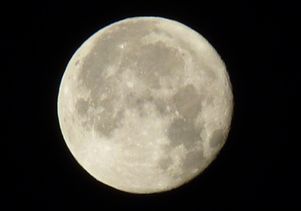
The moon does not influence the timing of human births or hospital admissions, a new UCLA study finds, confirming what scientists have known for decades.
Several new studies, one co-authored by a UCLA professor, show that transcription is in fact the most influential step in determining protein abundance.
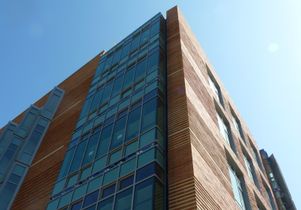
UCLA leaders and prominent alumni gathered March 19 to celebrate the new jewel of the Henry Samueli School of Engineering and Applied Science, Engineering VI.
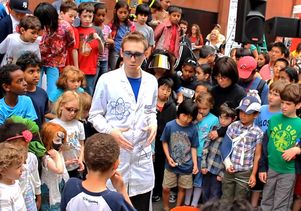
Biochemistry student Jeffrey Vinokur is the Dancing Scientist, whose zany science experiments have been featured on national TV shows, on YouTube and in school auditoriums.
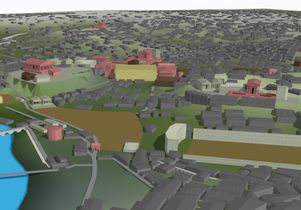
Intrigued by the question of whether Augustus Caesar transformed Rome from a city of bricks into a city of marble, as legend has it, UCLA professor Diane Favro decided to use advanced modeling software to reconstruct Rome at the time of his reign.
Life scientists have created an accurate new method to identify markers for many diseases — a significant step toward a new era of personalized medicine, tailored to each person’s DNA and RNA.
Most of the laws of nature treat particles and antiparticles equally, but stars and planets are made of particles, or matter, and not antiparticles, or antimatter. That asymmetry puzzled scientists for many years.
Screening travelers for fever on arrival has been criticized as ineffective, but the scientists found it can catch cases that screeners miss at departure.
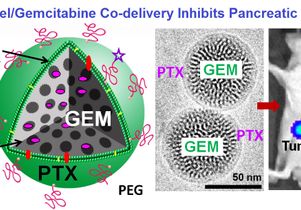
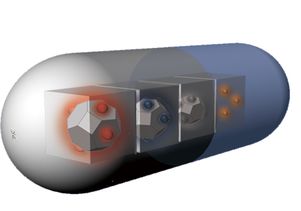
UCLA bioengineers have developed a revolutionary approach that brings together traditional drugs and nanotechnology-enhanced medications to create safer and more effective treatments.
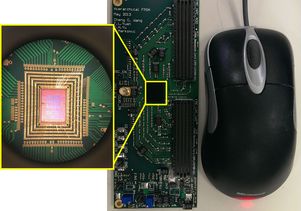
Two engineering graduates are the first employees in a new Mountain View startup that will use their innovation in the design of an important semiconductor chip.
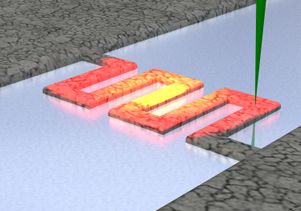
Researchers developed a thermal imaging technique that can “see” how the temperature changes from point to point inside the smallest electronic circuits.
Darwin’s writings focused much more on species that had changed over time than on those that hadn’t. So how do scientists explain a species living for so long without evolving?