Buffets of highly processed foods like sugar and flour are as tempting to rats as they are to humans and eating lots of this food weakens cues to stop eating when full.
Researchers identified a gene called AMPK that can slow the aging process throughout the entire body when switched on in key organ systems. Activating the gene in fruit flies extended the animals’ lifespans by about 30 percent.
UCLA will host universities and technology companies who are working to promote the development and adoption of Named Data Networking, an emerging Internet architecture.
Two UCLA engineering professors say that it's crucial for engineers to understand the hazards that threaten our levees to ensure that California's fresh water delivery system remains protected in the future.
Willeke Wendrich first developed an interest in ancient Egyptian archaeology as a 20-year-old undergraduate student. Now an esteemed faculty member in UCLA’s Department of Near Eastern Languages and Cultures, she’s made a career out of her lifelong passion
Stanley Osher, UCLA professor of mathematics and director of applied mathematics, is the third person ever to receive the prestigious Gauss Prize, the highest honor in applied mathematics.
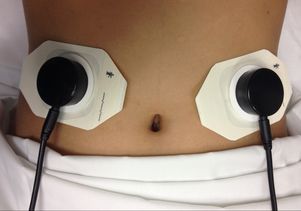
UCLA researchers have developed a disposable biosensor that attaches to the abdomen and may help doctors determine which patients should be fed following surgery.
Researchers at UCLA have set the stage for a watershed in mobile energy by using a unique graphene material to significantly boost the amount of energy supercapacitors can store.
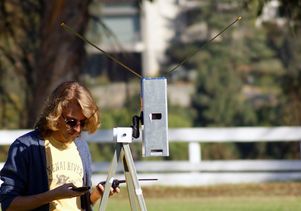
Dozens of students from majors across campus have spent thousands of hours on building a loaf-of-bread-sized satellite that will measure space weather.
Intellectual property — patents, copyright, trademarks, trade secrets — plays a vital role in economic growth and prosperity. Yet outside of law schools, most American colleges provide little or no opportunity for students to receive any substantive instruction in it.
The Hawaii Board of Land and Natural Resources' recent approval of a sublease moves the University of California and UCLA a step closer to peering deeper into the cosmos than ever before.
Black truffles are highly prized in haute cuisine. A study by an international team of scientists sheds new light on their unique pattern of DNA methylation, a biochemical process.
The center will advance the study of “program obfuscation,” the use of new encryption methods to make a computer program invisible to an outside observer while preserving the way it works.
While both planets are rocky with iron cores, the complex dynamics of Mercury's interior create an unusual magnetic field that is three times stronger at its northern hemisphere than its southern one.
The largest-ever genomic study published on any psychiatric disorder provides important new insights about the biological causes of schizophrenia, and it could lead to new approaches to treatment.
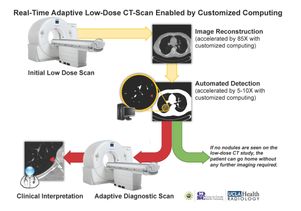
The NSF and semiconductor giant Intel Corp. have partnered to support UCLA research that could reduce radiation from CT scans and lead to the development of new cancer treatments.
Unlike many of today's other imaging technologies that use light waves and radio waves, the device uses terahertz waves, which provide high efficiency and signal clarity.
The three-year study found that language skills among children with autism greatly improved when spoken- and social-communication therapy was tailored based on their individual progress and delivered using computer tablets.
A UCLA-led study found that a new surgical technique is more effective than other current techniques to remove kidney tumors when the masses are located on the back of the kidney or when a patient has had previous abdominal surgery.
Aydogan Ozcan and Tracy Johnson have been named Howard Hughes Medical Institute professors in recognition of their breakthrough research and innovative approaches to undergraduate education.
The Roseline project, headquartered at UCLA, will work to improve the accuracy and efficiency with which computers maintain their knowledge of physical time and synchronize it with a variety of networked devices.
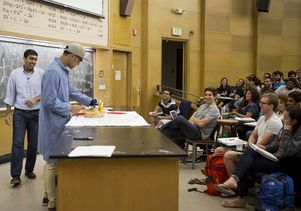
Getting into Neil Garg's course "was like ‘The Hunger Games,'" said one student. "I know people who waited two years to get in. People have celebratory dances when they learn they’re enrolled."
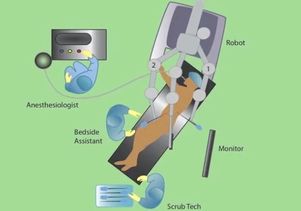
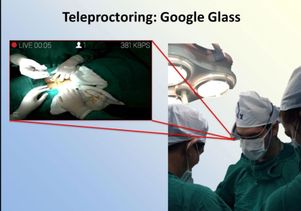
UCLA surgeon Dr. David Chen and surgical resident Dr. Justin Wagner have made it their mission to teach hernia surgery around the world and are using Google Glass as a training tool to watch procedures and comment in real time.