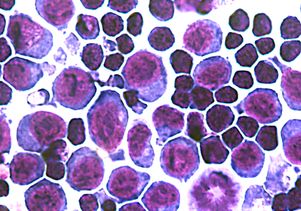
The funding from the California Institute of Regenerative Medicine will support Dr. John Chute's research aimed at creating new stem cell therapies for use in medical practice.
In clinical trials at UCLA, doctors are seeing major treatment successes with an experimental drug called MK-3475 in two types of cancer with historically low survival rates: metastatic melanoma and lung cancer.
A new report by professors from UCLA and five other universities concludes that climate engineering won't suffice, and we have to cut down the amount of carbon being released into the atmosphere.
The public is invited to join world-renowned culinary visionaries at UCLA's popular "Scientific Bake-off," part of life scientist Amy Rowat's "Science and Food" course.
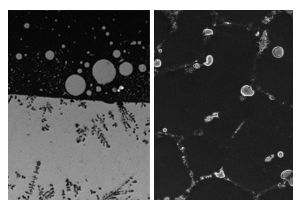
The UCLA-led team's new approach could lead to new materials with significant improvements in performance, such as self-lubricating bearings for engines, and it may eventually have applications in medicine.
"It's like your car's airbag, which won’t be deployed unless you really need it," UCLA's Alexander Hoffman said of the specialized immune cells, which use a built-in feedback system to determine which threats are real and which aren't.
Amy Rowat, an assistant professor in UCLA's Department of Integrative Biology and Physiology, believes food can be a powerful way to communicate science to a broad audience.
Identifying enzyme catalysts that improve the speed and efficiency of the drug-production process can be a major boon. Figuring out exactly why a particular enzyme works so well, UCLA researchers say, is an altogether different quest.
A rolling water treatment plant designed by UCLA researchers made a pit stop on campus this week before heading north to the San Joaquin Valley, where it will help address California’s inadequate water supply.
Phony laughter, unlike the real thing, is unique to humans, says Greg Bryant, who is studying the acoustic properties that differentiate the two types of cachinnation.
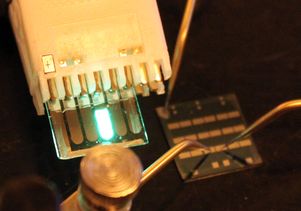
A device and manufacturing process created by UCLA researchers could lead to a significant leap in the quality of images on smartphones, computer displays, TVs and inkjet printers.
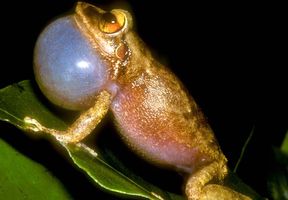
UCLA scientists found that not only have male coquis become smaller, but their mating call has also become shorter and higher pitched; the researchers attribute the change to Puerto Rico's warmer temperatures.
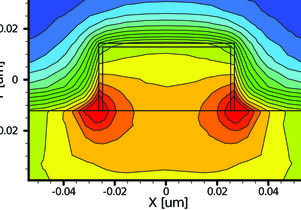
The UCLA researchers' findings counter years of conventional wisdom that a biosensor can be made more sensitive simply by reducing the diameter of the nanowires that make up the device.
UCLA life scientist Amy Rowat's tasty springtime demonstrations seek to advance the public's understanding of science through food, and food through science.