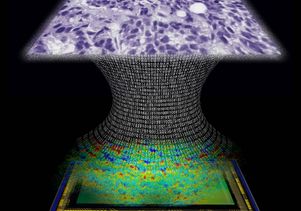
UCLA researchers led by Aydogan Ozcan have developed a lens-free microscope that can be used to detect cancer with the same accuracy as larger and more expensive optical microscopes.
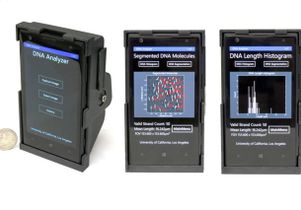
Researchers from UCLA have developed the first lightweight, compact device that converts an ordinary smartphone into an advanced fluorescence microscope.
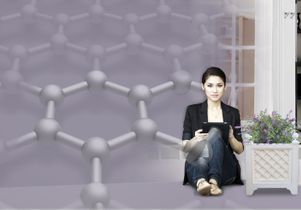
Company emerges from King Abdulaziz City for Science and Technology and the UCLA Center for Excellence in Green Technology. It aims to revolutionize electronics by using carbon-based nanomaterials to lower power consumption and improve performance of smartphones and wearable devices.
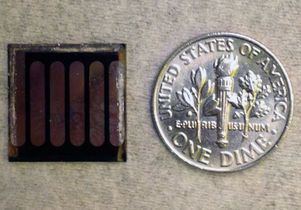
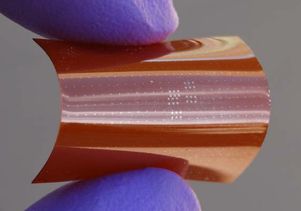
UCLA researchers find that using a perovskite solution could improve the quality and manufacturing efficiency of medical and commercial imaging devices.
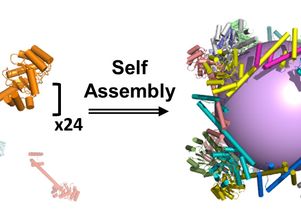
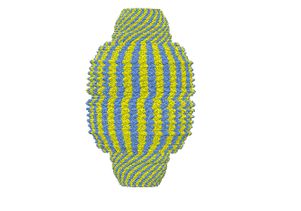
The scientists created the largest protein ever that self-assembles into a molecular “cage.” The protein is hundreds of times smaller than a human cell.
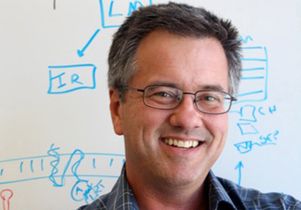
Jeffery F. Miller, a professor in the Department of Microbiology, Immunology and Molecular Genetics, is the new director of the California NanoSystems Institute (CNSI) at UCLA, Executive Vice Chancellor and Provost Scott Waugh announced today.
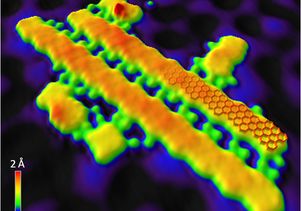
With their special electronic and optical properties, nanomaterials such as graphene and molybdenum sulfide have created excitement among scientists for their potential to revolutionize transistors and circuits.
Developed by UCLA’s Dr. Leonard Rome and Dr. Steven Dubinett, the treatment combines an immunotherapy agent with a drug delivery nanotechnology using nanoparticles called vaults.
The researchers' findings could lead to cancer treatments that are more effective with smaller doses and to therapies that could potentially eradicate the HIV virus.
Researchers at UCLA have set the stage for a watershed in mobile energy by using a unique graphene material to significantly boost the amount of energy supercapacitors can store.
The UCLA-led team's new approach could lead to new materials with significant improvements in performance, such as self-lubricating bearings for engines, and it may eventually have applications in medicine.
The UCLA researchers' findings counter years of conventional wisdom that a biosensor can be made more sensitive simply by reducing the diameter of the nanowires that make up the device.
"Today, our scientists are mapping the human brain to unlock the answers to Alzheimer’s; developing drugs to regenerate damaged organs; devising new material to make batteries 10 times more powerful. ... Now is the time to reach a level of research ...