Los Angeles music attorney Dina LaPolt represents recording artists, songwriters, producers, musicians, authors and writers, and teaches a UCLA Extension class, “Legal and Practical Aspects of the Music Business.”
The President’s Public Service Law Fellowships will award $4.5 million annually to students who want to pursue public interest legal careers but might otherwise — out of financial need — seek private sector jobs.
UCLA law professor Asli Bâli has spent years in private practice in New York and Paris, represented 9/11 victims as well as immigrant Muslim men detained in the aftermath and written extensively on international human rights.
Thanks to the law school’s Supreme Court Clinic, the court will issue rulings on cases dealing with free speech, the right to a speedy trial, search and seizure, and deportation.
John Villasenor notes that in the battle between Apple and the U.S. government, the ever-accelerating pace of change in technology makes applying older laws a murky proposition.
The report recommends that a state agency and agricultural commissioners evaluate pesticide mixtures and implement regulations to more adequately protect human health.
Two UCLA experts on end-of-life issues talk about California’s new physician-assisted suicide law that will give terminally ill patients and their doctors a legally sanctioned process to talk about difficult choices.
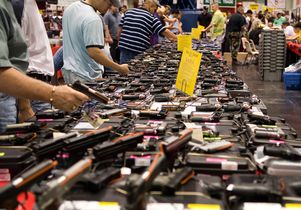
Law professor Adam Winkler writes that the “menacing” look of assault rifles belies their actual impact on society. Most gun crimes are committed with handguns.
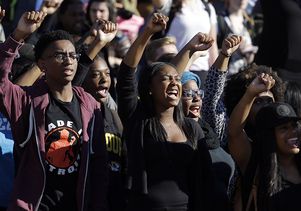
Law professor Cheryl Harris writes that as constitutional standards evolve, the assumption that a neutral rule permitting racist and anti-racist speech is fair could not be further from the truth.
The Ziffren Center for Media, Entertainment, Technology and Sports Law will expand UCLA Law’s highly regarded programs through curricular innovations, research support, new programming and hands-on skills training.
With an impressive string of cited amicus briefs and appellate litigation appearances, UCLA Law faculty members are making an impact on important issues.
Law professor Kimberlé Crenshaw writes in the Washington Post about how intersectionality brings to light the invisibility of many constituents within groups that claim them as members, but often fail to represent them.
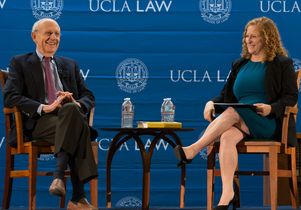
Breyer joined School of Law Dean Jennifer Mnookin in a discussion about the law, the Supreme Court and also his new book “The Court and The World: American Law and the New Global Realities.”
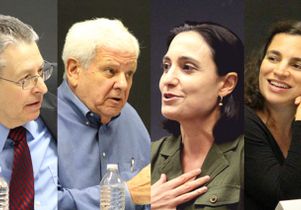
The much-debated nuclear agreement with Iran is now a fact and should be given a chance to work, a panel of experts from UCLA and the RAND Corporation said during a discussion that drew a packed crowd to a lecture hall in Bunche Hall recently.
The UCLA Asian American Studies Center has launched the Suyama Project to gather and make available online evidence of resistance among Japanese Americans forcibly removed from their homes during World War II.
Professor John Villasenor writes on Slate that the cyberattackers would bear primary responsibility but manufacturers and car owners could face some liability, too.
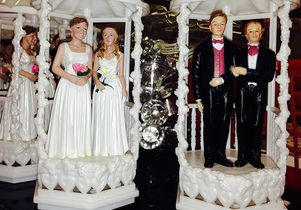
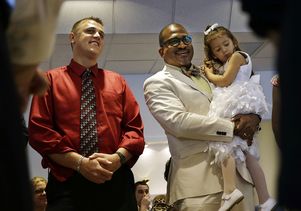
Law professor Douglas NeJaime writes in the Los Angeles Times that the struggle for full legal protections and equal rights has not ended for gay and lesbian families.
Adam Winkler notes that the legal reasoning used by Chief Justice John Roberts in the decision that upheld the president’s signature health care law will preserve it against future challenges.