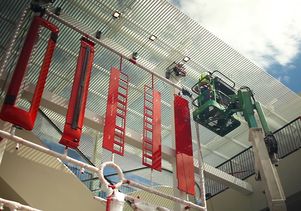
Nova Jiang’s playful artwork, "Red Car," came together because of a collaboration between the UCLA School of the Arts and Architecture and Australia-based Westfield Corp. to support emerging artists.
The UCLA Asian American Studies Center has launched the Suyama Project to gather and make available online evidence of resistance among Japanese Americans forcibly removed from their homes during World War II.
UCLA Byzantine art history and archaeology professor Sharon Gerstel has devoted much of the last year to studying how architectural changes in Byzantine churches enhanced the performance of religious music.
Professor Melvin Rogers writes in the Atlantic that Ta-Nehisi Coates’ bestselling new book about racism and African American identity fails to recognize the importance of hope.
On the 50th anniversary of the Watts riots, historian Robin D.G. Kelley writes in the L.A. Times that the era gave birth to social justice and arts organizations that remade the community and whose legacy continues today.
History professor Brenda Stevenson writes that 150 years after emancipation in the United States, there are still 20 to 30 million people enslaved around the world.
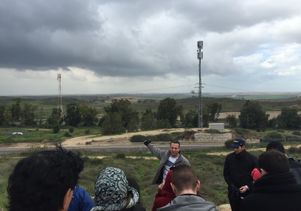
Ten UCLA students will be headed for talks with staff at the State Department, White House and United Nations and other Middle East experts before heading for ground zero of the Palestinian-Israeli conflict.
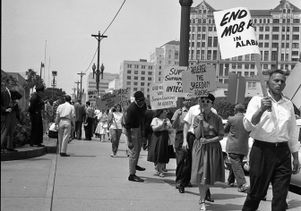
Dismissing unrest in America’s cities as aimless violence overlooks the roots of people’s anger, according to the panelists at a UCLA-Zócalo event examining the history of urban resistance.
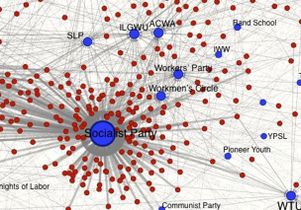
Tobias Higbie is a UCLA scholar of labor history who is using digitized historical records to gain new perspectives about labor and social movements of past eras.
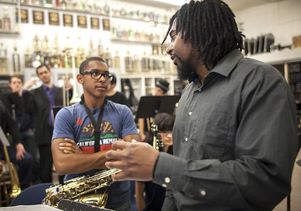
The jazz legend mentored musicians, and in this spirit the virtuoso grad students study with modern masters like Herbie Hancock and Kenny Burrell, and in turn share their expertise with thousands of students in local schools.
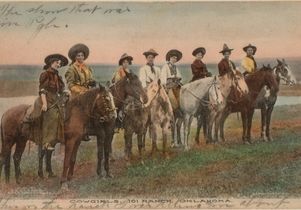
In his recently published book, Aron reveals how Manifest Destiny influenced the Nazis and talks about how modern scholarship of the West now encompasses the area’s demographic diversity.
On Tuesday, April 28, the campus community, together with 2,000 K-12 students, will gather for events to commemorate the day 50 years ago when Dr. Martin Luther King Jr. visited UCLA and addressed nearly 5,000.
On the 40th anniversary of the Khmer Rouge’s proclamation of victory in Cambodia, UCLA demographer Patrick Heuveline has produced new estimates of the regime’s death toll between 1975 and 1979.
The UCLA Latin American Institute is presenting a lecture on chocolate and other community outreach activities to share the latest research findings on the Latin American region with L.A. residents.
Magnetic media, which are deteriorating, make up half of the holdings in archive. To save the most significant materials that are relevant to California the archive has begun posting them online.
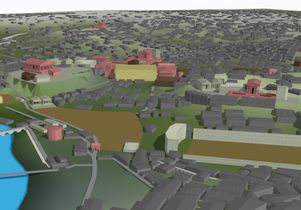
Intrigued by the question of whether Augustus Caesar transformed Rome from a city of bricks into a city of marble, as legend has it, UCLA professor Diane Favro decided to use advanced modeling software to reconstruct Rome at the time of his reign.
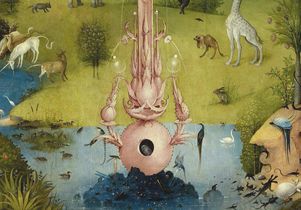
UCLA art history lecturer Gregory Harwell talks about the art, religion and influence of Dutch Renaissance painter Hieronymous Bosch on March 5, 12 p.m., 306 Royce Hall.
While war rages in Syria, that country's people can still experience the culture and history of the region’s Mesopotamian roots through an exhibit made possible by a Kurdish nonprofit organization and UCLA archaeologist Giorgio Buccellati.
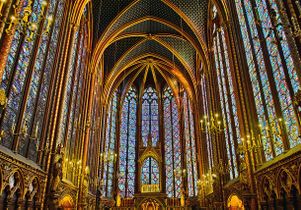
In a new book, UCLA art historian Meredith Cohen shows that the rich history and cultural significance of the 13th century Gothic chapel are equal in importance to its artistic merits.
Allyson Nadia Field writes about how 100 years ago the racist film inspired black filmmakers to respond and that the film still resonates because the country still grapples with achieving racial justice.
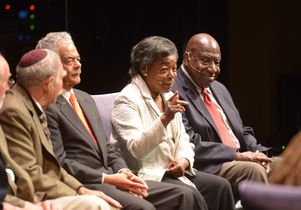
More than 800 people gathered in Royce Hall to applaud the courage of 16 civil rights activists — all UCLA alumni — who challenged segregation in the South in 1961 as Freedom Riders.
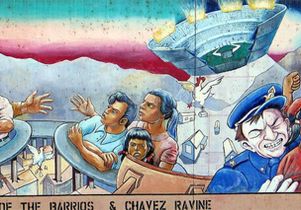
A new book by UCLA urban historian Eric Avila gives voice to the opponents of highway construction in the 1950s, ’60s and ’70s and, in particular, in communities of color.