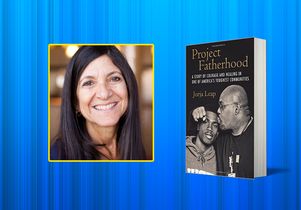
In “Project Fatherhood,” social welfare professor Jorja Leap writes about the struggles and triumphs of men doing their best to become good fathers and mentors in Watts.
The director of the Center for Gender-Based Biology at UCLA co-wrote an op-ed stating that we should be careful not to confuse the properly banned gay-conversion therapy with potentially helpful therapy for gender dysphoria.
UCLA study shows that by 2040 there will be an additional 6 million-plus registered Asian American voters in the United States — an increase of more than 100 percent — and explores what this means for future elections.
A collection of social media pictures posted by urban planners and acolytes of retiring urban planning professor Donald Shoup posing with a life-size cardboard cutout of the man who wrote the book on parking.
The research director at UCLA’s Center X writes about how teacher evaluations that include hours of observation and student feedback, among other criteria, foster trust between educators and those grading them.
M.V. Lee Badgett of the Williams Institute writes that in the May 22 election, voters in historically Catholic Ireland, might legalize nationwide same-sex marriage before Americans.
UCLA scholar Ramesh Srinivasan has established a center that will link scholars who want to study the role digital technology plays in cultures globally.
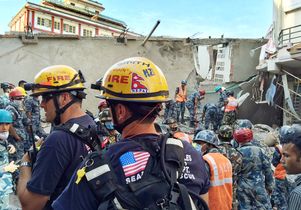
Dr. Atilla Uner, a UCLA clinical professor of emergency medicine, served on a U.S. search and rescue team that helped find survivors of the Nepal earthquake.
Education professor Mike Rose writes in the Washington Post that character education is no substitute for improving poor students’ lives by addressing inequality.
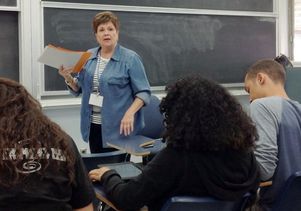
For 15 years the UCLA education research center has conducted workshops to help thousands of Los Angeles high school students prepare for their Advanced Placement exams.
Daniel J.B. Mitchell says that to help avoid a repetition of contentious funding battles around the UC budget, the 55-year-old state Master Plan for Higher Education needs updating.
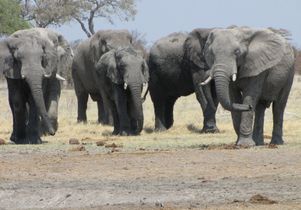
The loss of elephants, rhinoceroses and hippopotamuses would have drastic implications not only for the species themselves, but also for other animals and the ecosystems in which they live.
Frequency of drinking correlates with a higher likelihood of supervisory neglect by parents but a lower likelihood of physical neglect, according to a UCLA-led study.
Behavioral economist Shlomo Benartzi’s research shows that smarter and simpler website and app design can guide people to save for retirement properly.
In his recently published book, Aron reveals how Manifest Destiny influenced the Nazis and talks about how modern scholarship of the West now encompasses the area’s demographic diversity.
UCLA professor Linda Sax is leading a multi-institutional study that could help determine ways to increase the low numbers of women, in particular women of color, in college computer science programs.
UCLA’s Lynn Vavreck writes in The New York Times that people’s opinions about abortion tend to converge when they’re asked to evaluate specific situations rather than simply express support or opposition.
In a Zócalo discussion featuring two UCLA professors, experts agreed that hurdles like an official definition, the assessment of intent and the expected violence of warfare make stopping genocide extremely difficult.
History professor Robin D.G. Kelley writes that claiming rioters are sabotaging “legitimate” efforts to bring about racial and social justice mistakenly presupposes that “legitimate” efforts have been working.
Behavioral health intervention developed at UCLA will help female veterans and their families at new facility in San Pedro and more facilities in Long Beach.